
Last updated November 25, 2026
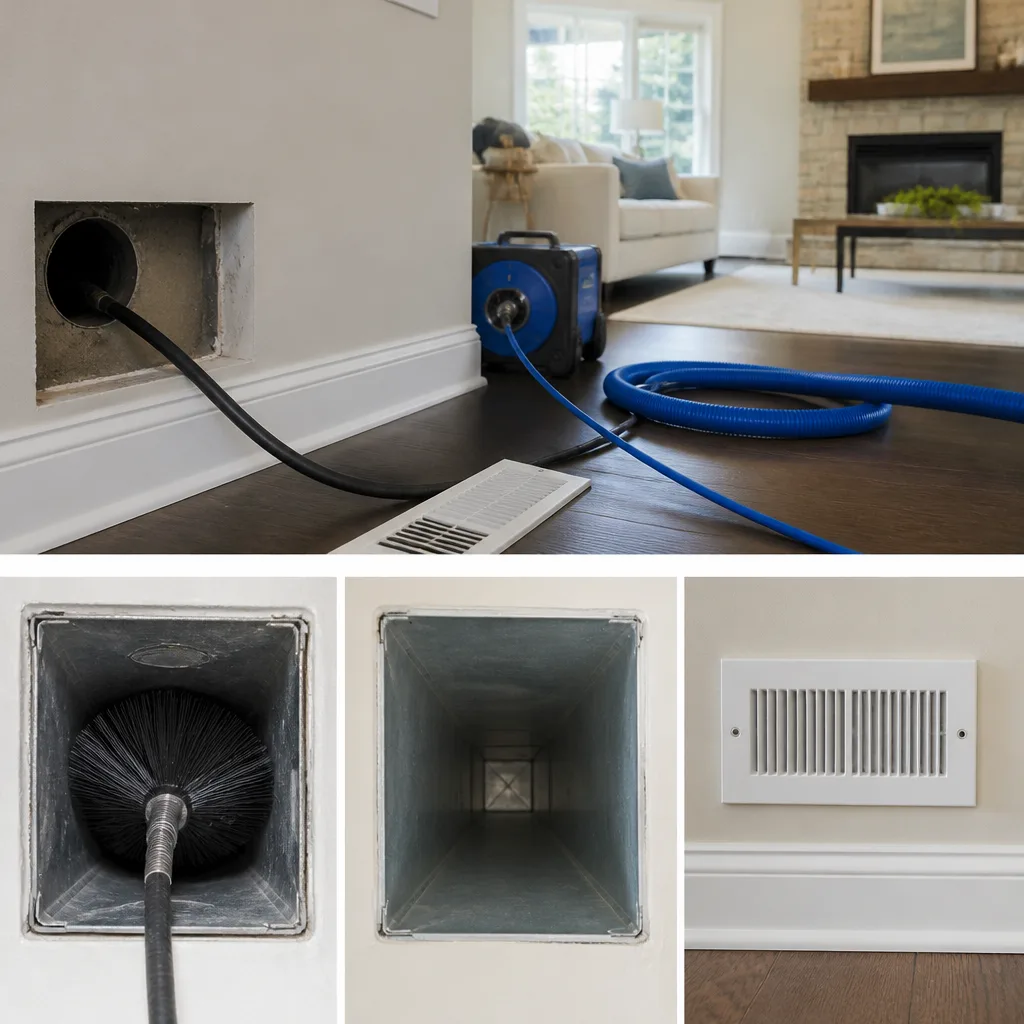 Whole-home duct cleaning
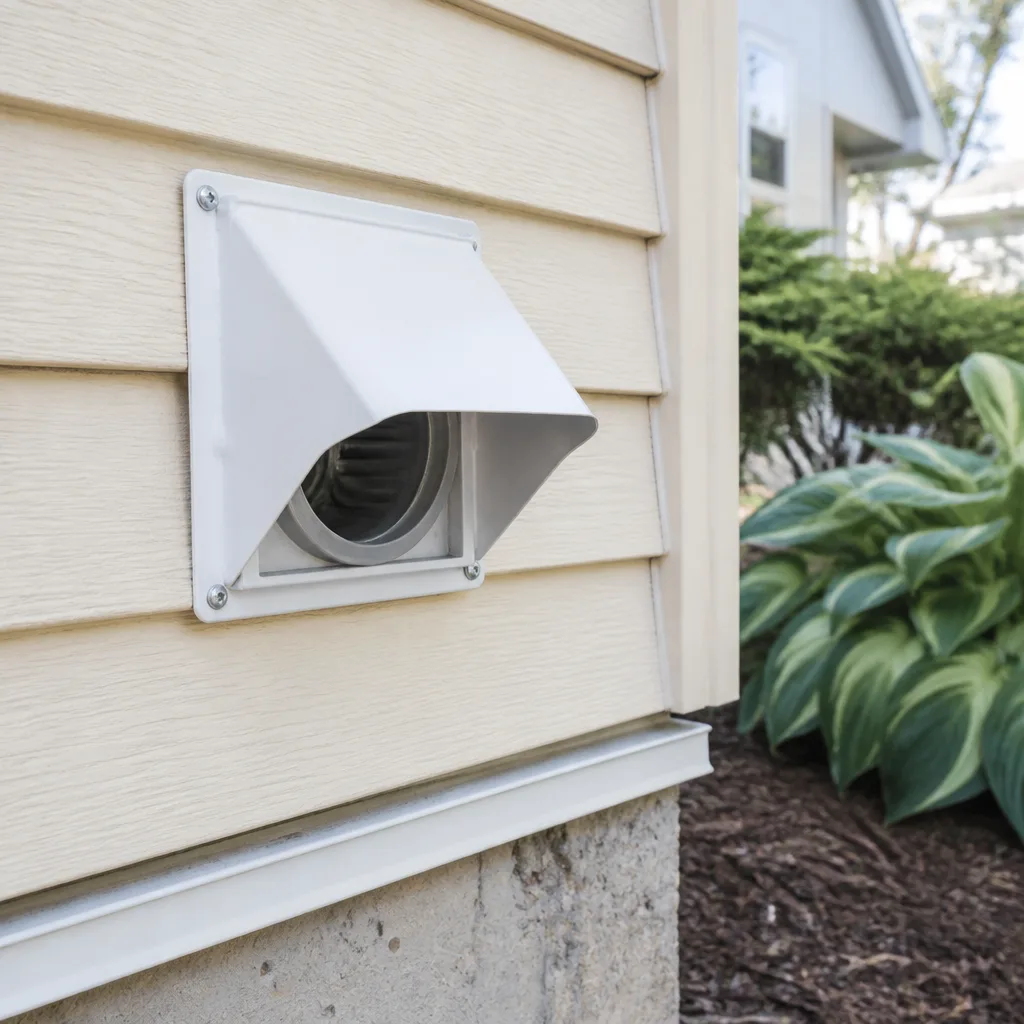 Dryer vent cleaning
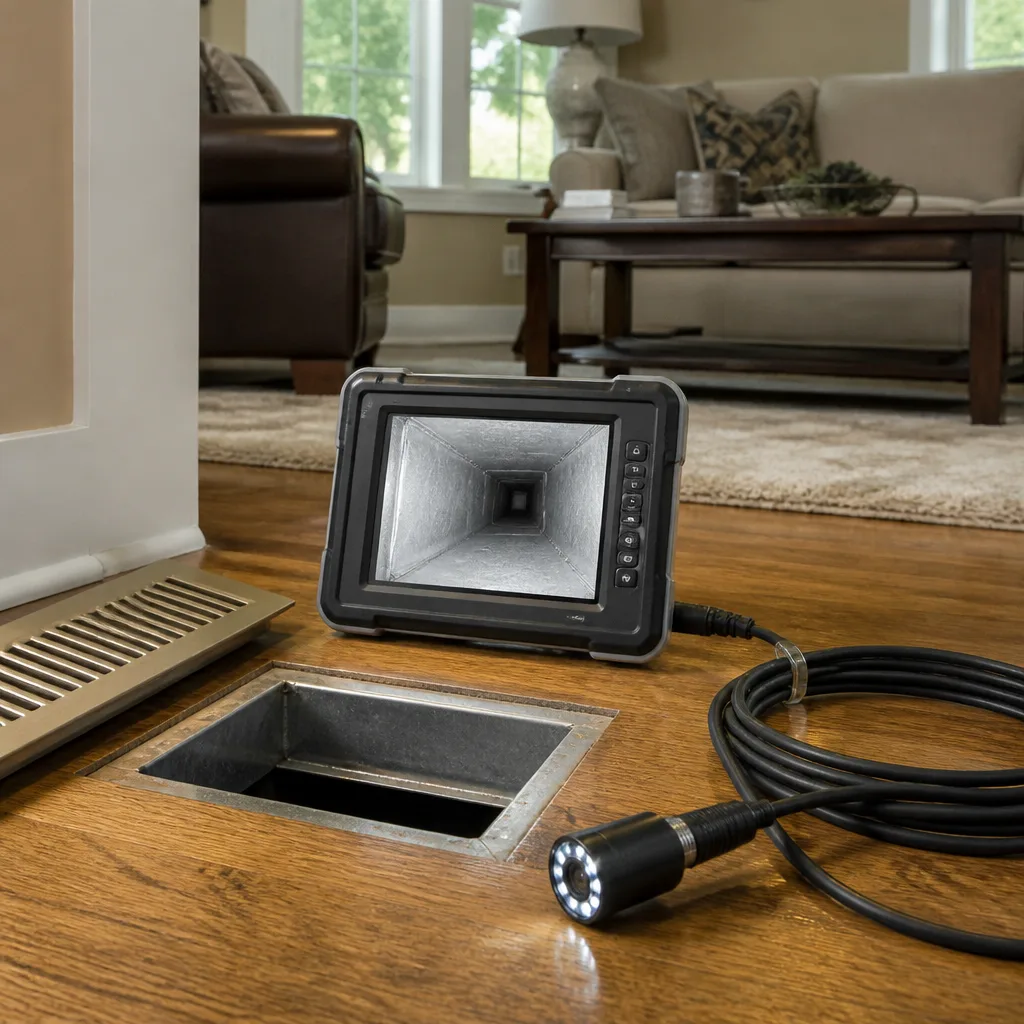 Camera inspection
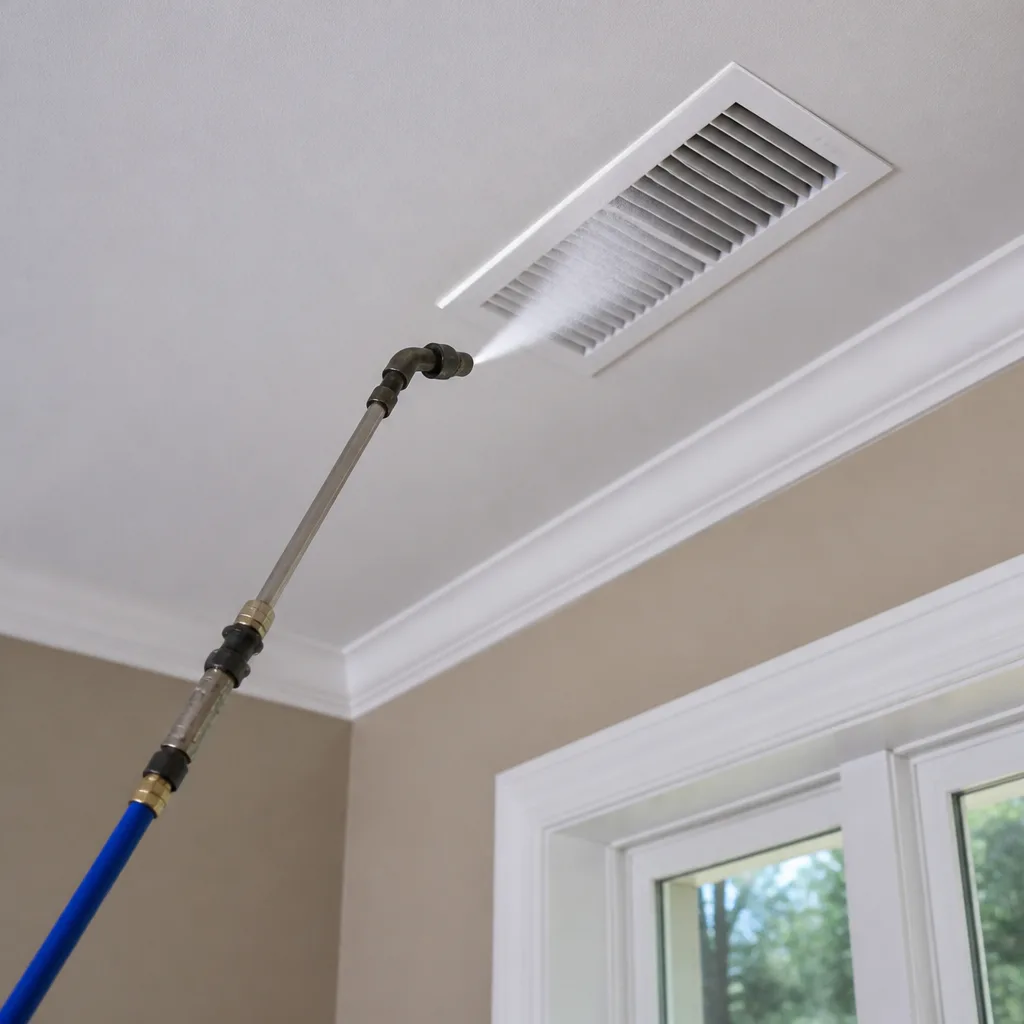 Sanitizing & deodorizing
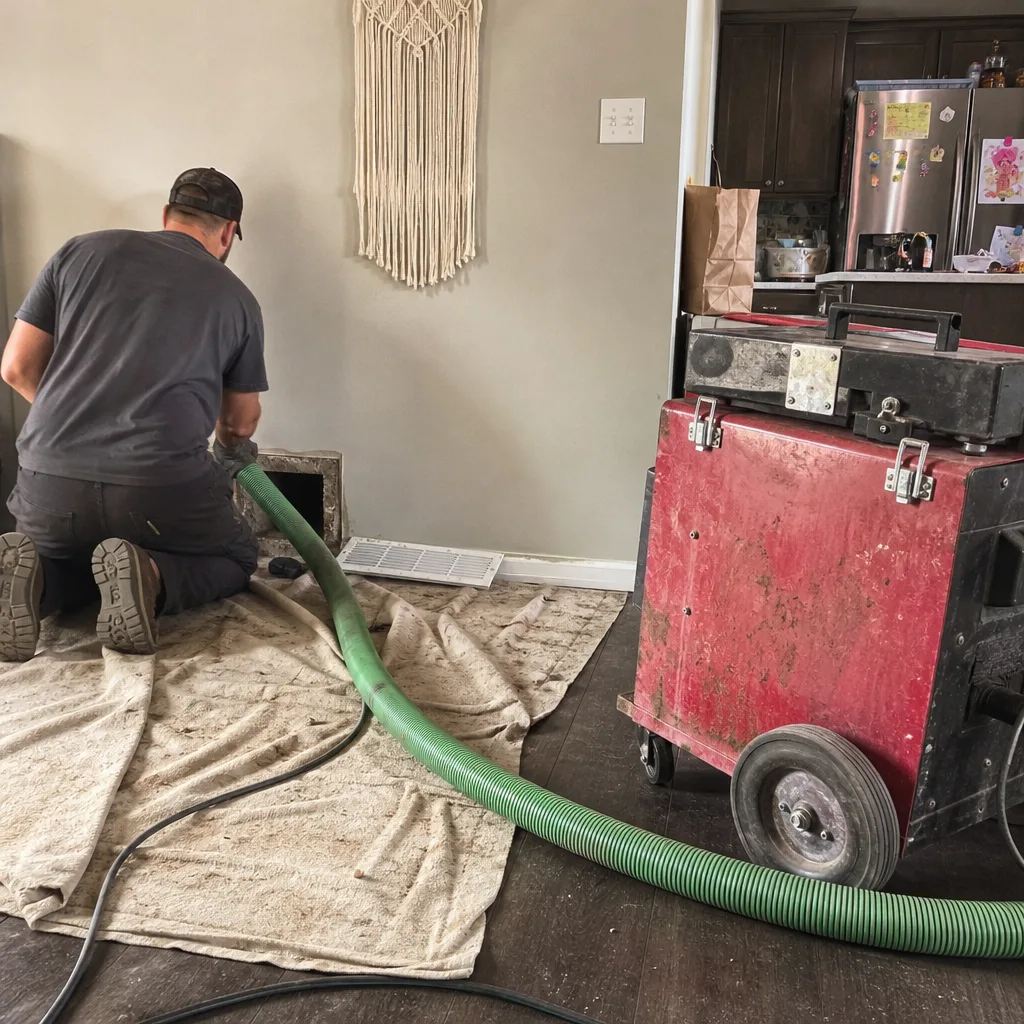
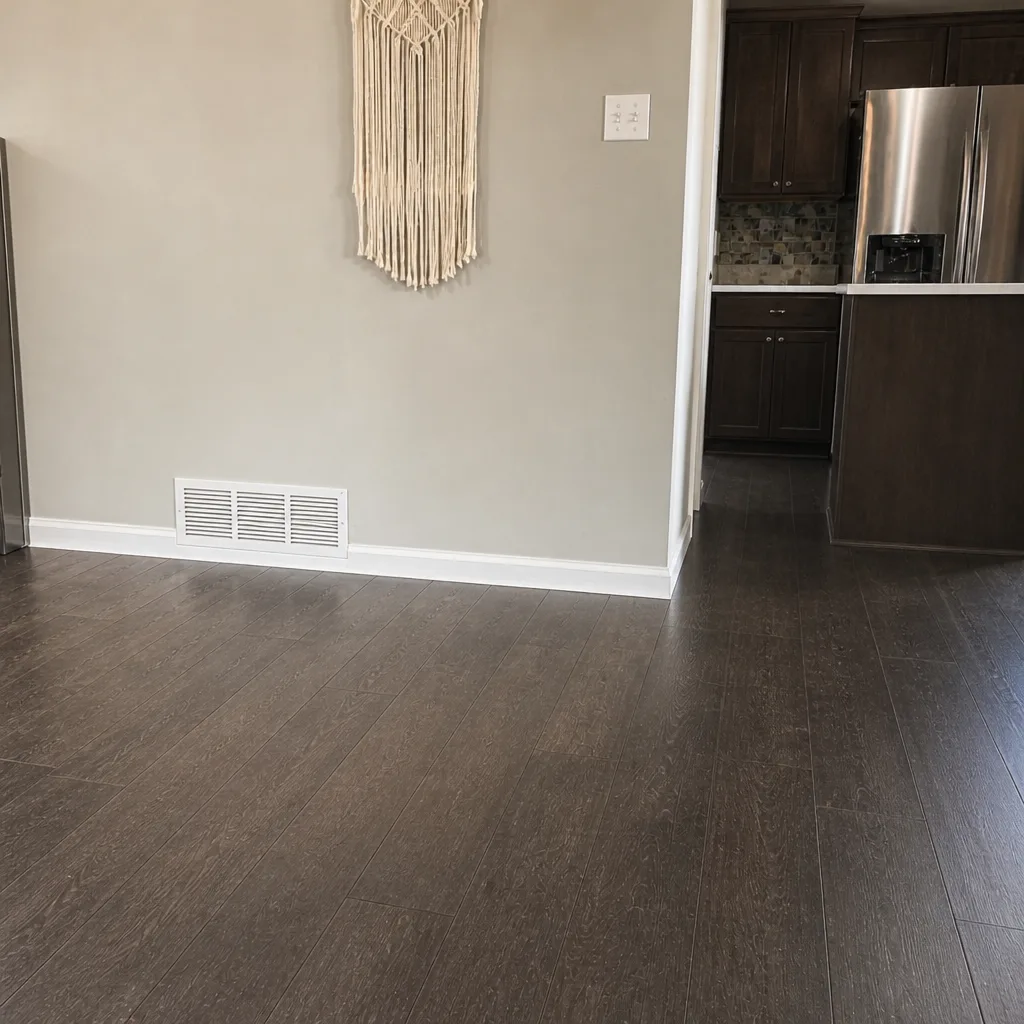
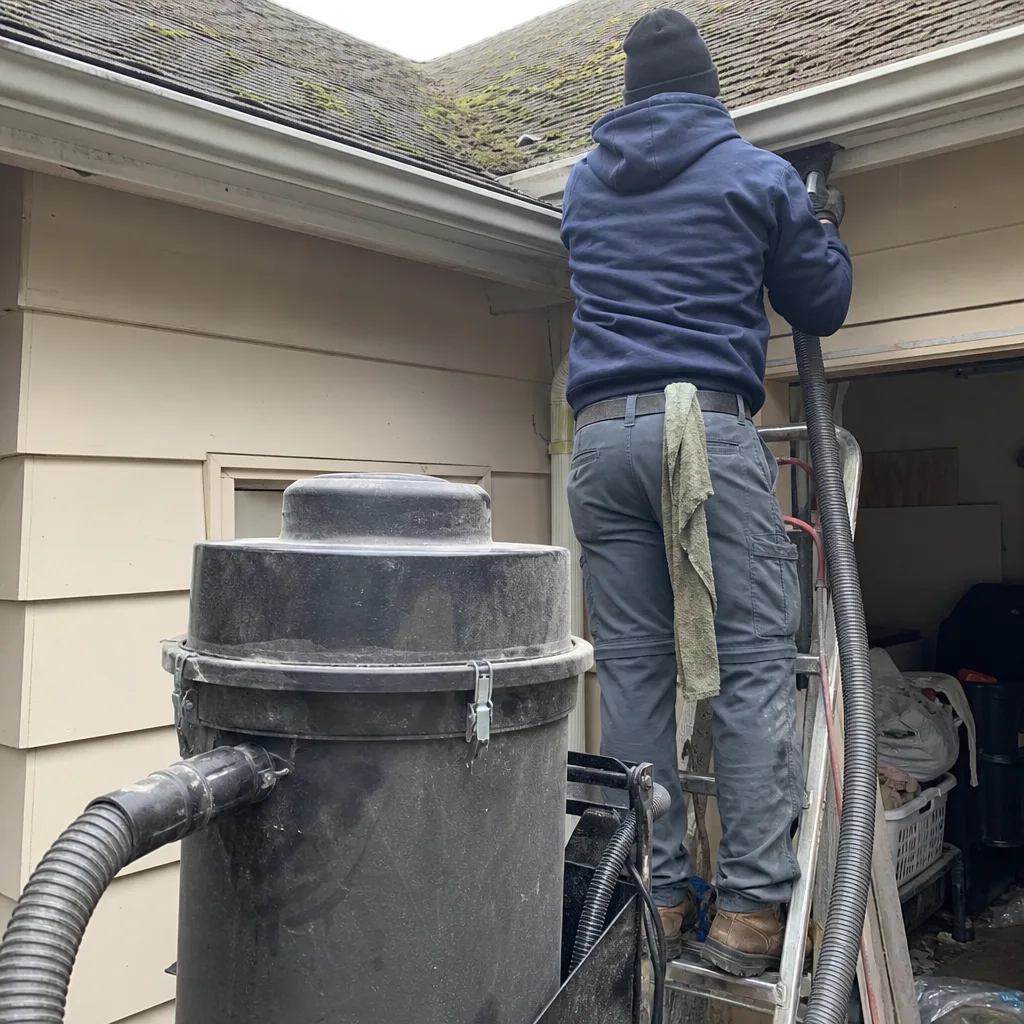
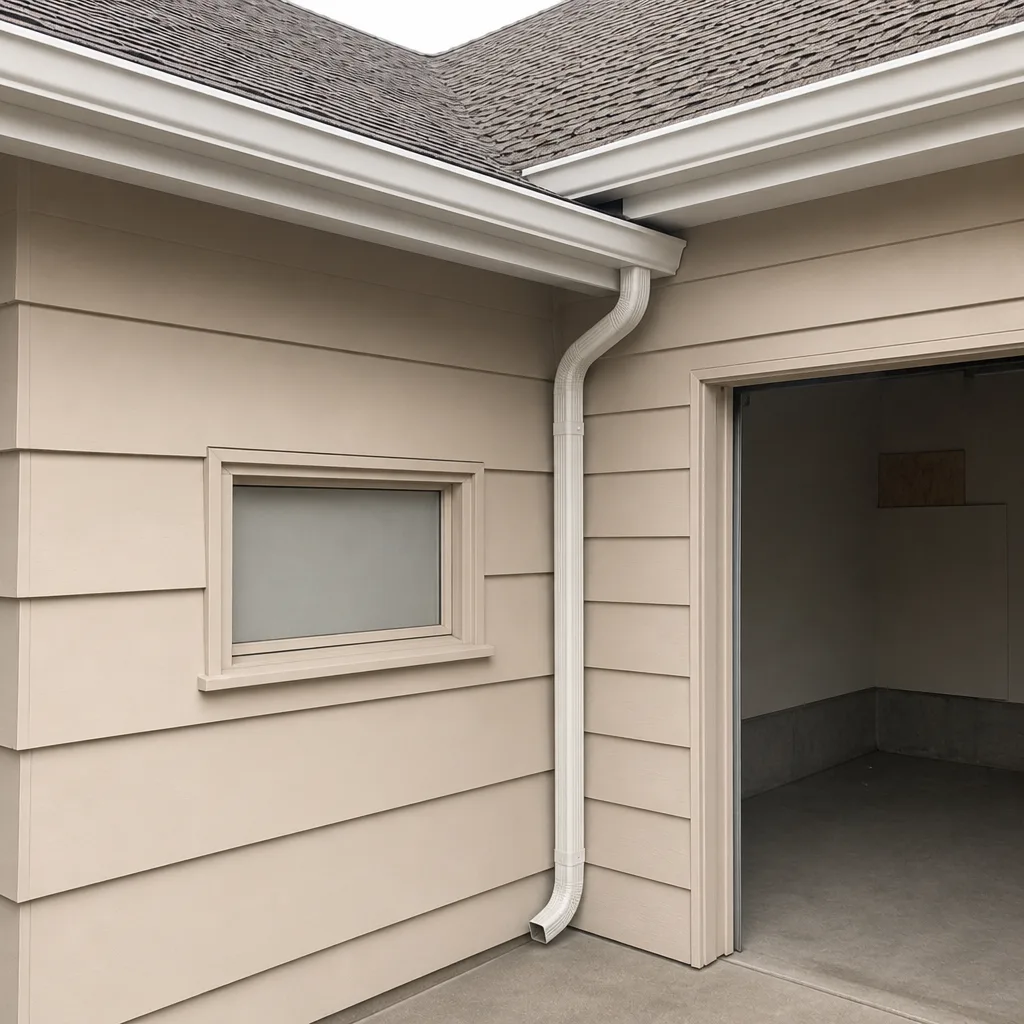
Whole-system duct and dryer vent check with before-and-after photos - you see exactly what came out of your vents
That "$99 whole-house special" is a bait ad - the real number appears once they are in your hallway, or the "clean" is a shop-vac at the register. We photograph the inside of your ducts before and after instead.
The Complete Guide to Air Duct Cleaning in Auburn
A duct cleaning that stops at the main trunk lines leaves roughly 40% of your system’s internal surface area untouched – the branch runs, boots, and plenums where debris actually settles. That’s the part most homeowners never see, and it’s the part that keeps blowing dust back into the room. In Auburn, we find this matters more than usual because the housing stock runs in two very different directions: older ranch-style homes with long, straight sheet-metal trunks, and newer Pacific Northwest builds that lean on flex duct with tight bends and short runs. Each fails in its own way. This guide walks the whole air pathway as one connected system, from return grilles through the air handler to the supply boots, and shows you what a real cleaning evaluates in an Auburn home.
Quick Answer
Air duct cleaning in Auburn means cleaning the entire air pathway – supply and return ducts, branch runs, boots, plenums, the air handler coil and blower, and dryer vent – under negative pressure so loosened debris leaves the house instead of your living room. A professional job follows NADCA’s ACR standard, uses contact-vacuum equipment like Rotobrush or Nikro systems, and includes an inspection of duct integrity. Cleaning just the visible trunk lines, or skipping the air handler, leaves most of the contamination in place.
Styles & brands we work with
- Whole-home duct cleaning
- Dryer vent cleaning
- Camera inspection
- Sanitizing & deodorizing
Table of Contents
- Why a Duct System Is One Connected Unit
- How Auburn’s Home Styles Change the Cleaning Approach
- What NADCA’s ACR Standard Actually Requires
- The Role of Negative Pressure in a Real Cleaning
- Why the Air Handler Coil and Blower Matter
- Auburn’s Air Quality Factors and Your Ducts
- Duct Repair and Sealing: Fixing the Root Cause
- How to Choose a Duct Cleaning Contractor in Auburn
Why a Duct System Is One Connected Unit
A forced-air system doesn’t care where your ducts begin or end – it moves one continuous body of air through a closed loop. The return grille pulls room air in, the return trunk carries it to the air handler, the blower pushes it across the coil, and the supply trunk and branch runs distribute it back into every room. Contamination at any one point travels everywhere.
That’s why partial cleaning fails. When a crew cleans only the main supply and return trunks – the big, easy-to-reach lines a smaller vacuum can handle – the branch runs and boots stay loaded with dust, pet hair, and construction grit. The blower keeps pulling that material into the airstream. Within a few weeks, the trunk lines you paid to clean are dirty again, and the homeowner assumes duct cleaning doesn’t work.
A complete-system approach means every node gets attention:
- Return grilles and return trunk lines
- Supply trunk and every branch run
- Supply boots and register openings
- The air handler cabinet, blower wheel, and evaporator coil
- Plenum connections at the furnace or air handler
- The dryer vent as a separate exhaust pathway
We treat those as one job because they share one airstream. The Auburn Air Duct Cleaning Pros approach is built on that idea: full air-pathway service from intake to exhaust, not a swipe at the visible lines. When a system is cleaned as a unit, the result is indoor air you can verify with before-and-after photos of your own ducts, not a promise you have to take on faith.
How Auburn’s Home Styles Change the Cleaning Approach
Auburn’s housing stock splits into two broad groups, and each one demands a different cleaning method. Understanding which type you live in explains why a single approach doesn’t fit every home.
Older ranch-style homes
Many mid-century ranches in Auburn were built with rigid sheet-metal ductwork – long, straight trunk lines with short branch takeoffs. Sheet metal is durable and cleans well with a rotating contact brush and strong vacuum. The challenge is different: these systems often have decades of settled debris, loose joints, and unsealed seams that leak air into crawl spaces and attics. Cleaning reveals leaks that sealing can fix.
Newer Pacific Northwest builds
Construction from the past couple of decades leans heavily on flex duct – corrugated, insulated, and routed through tight chases and truss bays. Flex duct’s ridges trap debris and its bends slow airflow, so a portable vacuum struggles to pull material through the full run. Flex also tears more easily, so a technician has to use the right brush head and controlled agitation rather than a heavy rotating brush.
The practical takeaway: when you get a quote in Auburn, ask how the contractor handles your specific duct type. A crew that only owns one tool for every layout is telling you something. Proper cleaning in Auburn means matching method to material – rigid brush and high airflow for sheet metal, gentler agitation and stronger suction for flex – and inspecting for damage along the way.
What NADCA’s ACR Standard Actually Requires
NADCA’s ACR standard – Assessment, Cleaning, and Restoration – is the recognized industry benchmark for how HVAC system cleaning should be done. Many contractors cite it. Far fewer can show you they follow it. Here’s what it actually calls for and how to verify a contractor isn’t just using the acronym as marketing.
Assessment
Before any cleaning begins, a contractor should inspect the system and document conditions – visible debris, moisture, microbial growth, and duct integrity. A credible contractor photographs the interior before touching anything. If a crew arrives and immediately starts cleaning without an inspection, they skipped step one.
Cleaning
Cleaning must address all components in the air pathway, use source removal (physically removing contaminants, not just fogging them), and maintain negative pressure throughout. Source removal is the key phrase – a crew that mists a sanitizer into dirty ducts without removing the debris has done almost nothing.
Restoration
After cleaning, components should be returned to their proper condition – seals checked, access panels closed, and any damage reported. Restoration is where duct repair and sealing fit in.
How to verify compliance
- Ask for before-and-after photos of the duct interiors on your own home, not stock images.
- Ask whether the crew uses contact-vacuum equipment and negative pressure, and get a specific answer.
- Confirm the air handler coil and blower are in scope, not quoted as an upsell later.
- Ask how they’ll protect duct integrity during cleaning – brush heads and vacuum settings that suit your duct material.
- Request a written scope that lists every component to be cleaned.
That last item is the simplest filter. A written scope you can read before work starts separates a contractor from a coupon crew. On every job we quote, the price is one flat price for the whole system, agreed before work begins, so there’s no surprise line item once the equipment is running.
The Role of Negative Pressure in a Real Cleaning
Negative pressure is the single most important technical detail in duct cleaning, and it’s the one homeowners almost never ask about. It simply means the vacuum pulls harder than the blower pushes, so whenever a brush loosens debris, the debris travels toward the vacuum instead of into your rooms.
Here’s how the process works in a properly equipped job:
- A high-capacity vacuum connects to the duct system, usually at a main trunk or plenum opening, drawing the whole system under negative pressure.
- Compressed air and rotating brushes agitate debris from every branch run and boot.
- Because the system is under vacuum, loosened material is captured at the source and carried out, not redistributed to nearby rooms.
- Containment equipment keeps dust from escaping into living spaces during the process.
- The crew verifies the interior with a camera and photographs the finished work.
In longer duct runs – common in Auburn two-story homes where the air handler sits at one end and branch runs stretch to far rooms – portable shop-style vacuums lose suction along the length of the duct. Truck-mounted and high-capacity contact-vacuum systems hold their pull over those distances. That’s the gap between equipment that can clean a whole system and equipment that can only reach the first few feet. We use Rotobrush and Nikro contact-vacuum systems for exactly this reason, and Abatement Technologies equipment to maintain negative-air containment so loosened debris never re-enters living spaces during the work.
Why the Air Handler Coil and Blower Matter
Cleaning the ducts while leaving the air handler dirty is like washing a floor and then walking across it in muddy boots. The coil and blower sit at the center of the system. Every cubic foot of air passes across them.
The evaporator coil is a dense fin-and-tube assembly that collects dust like a filter. A loaded coil restricts airflow, which raises energy use and reduces how much conditioned air reaches your rooms – and it becomes a breeding surface for microbial growth when it stays damp. The blower wheel is worse: its curved blades catch dust and hair, and a caked blower wheel moves noticeably less air than a clean one. A blower that’s out of balance from uneven debris can also grow noisier over time.
During cleaning, the coil, blower, and cabinet interior should all be inspected and cleaned as part of the system. We combine that with HVAC cleaning in the same visit, because the air handler is where cleaning and mechanical health meet. A thorough job also flags problems – a coil that needs a technician’s attention, a blower that’s off balance, a condensate issue – so you can address them before they get expensive.
If a quote only covers ducts and never mentions the air handler, ask directly whether the coil and blower are included. The answer tells you whether the contractor understands the system.
Auburn’s Air Quality Factors and Your Ducts
Auburn sits between the Cascade foothills and the developed corridors of the Green River Valley, and that geography shapes what ends up inside your ductwork. Three factors show up again and again in the systems we clean here.
Cedar and fir pollen
Spring in the Puget Sound lowlands brings a heavy load of cedar and fir pollen. Fine pollen grains slip past standard low-MERV filters and settle in duct runs, and once they’re inside they keep getting re-suspended every time the blower kicks on. Homeowners with allergies often blame their filters when the ducts are the real reservoir.
Construction dust from ongoing development near SR-167
Auburn’s continued growth around SR-167 and the surrounding corridors means active grading and building near many neighborhoods. Construction dust is finer and more abrasive than typical household dust, and it works its way into return grilles and flex-duct ridges. Homes near active sites tend to need more attention inside the ductwork, not just on surfaces.
Wildfire smoke infiltration from Eastern Washington summers
Summer smoke drifting from Eastern Washington pushes residents to close windows and rely on their HVAC systems for filtered air. That strategy only works if the ducts and air handler are clean and the filtration is up to the job. Smoke particles compound existing dust load.
This is where air quality products bridge the gap between a cleaning visit and ongoing indoor air health. Honeywell and Aprilaire filtration components can be installed during service – improving filtration rather than just promising cleaner air – so the system handles Auburn’s pollen and smoke seasons better going forward. That’s indoor air you can verify, tied to equipment and process.
Duct Repair and Sealing: Fixing the Root Cause
Cleaning removes contamination. It doesn’t stop it from coming back. Leaky ductwork is the root cause of re-contamination in a lot of Auburn homes – and it’s also money leaking out of the system every month.
Rigid sheet-metal systems in older homes tend to have loose joints and unsealed seams. Flex duct can develop tears, crushed sections, or disconnected runs at the boots. Each leak does two things: it pulls dust, insulation fibers, and attic or crawl-space air into the airstream, and it dumps conditioned air into spaces you don’t live in.
During cleaning, we inspect duct integrity and can repair and seal problems found along the way. A disconnected flex run, a torn section, or a leaking plenum connection can often be corrected during the same visit. That’s the difference between cleaning and actually fixing the problem: a contractor that hands you a problem report and leaves hasn’t solved anything. Sealing the system after cleaning means the next twelve months of dust have a much harder time getting back in.
- Loose joints and seams on sheet-metal systems
- Torn or crushed sections of flex duct
- Disconnected runs at boots and plenums
- Leaking plenum connections at the air handler
- Unsealed penetrations where ducts pass through framing
How to Choose a Duct Cleaning Contractor in Auburn
The duct cleaning market has a reputation problem for a reason: the low coupon price followed by a much larger invoice once the technician is on site. Choosing well comes down to a handful of concrete questions you can ask before booking.
- Is pricing flat per system, or per vent? A flat price agreed before work starts removes the incentive to add line items mid-visit. Per-vent pricing tends to grow once the technician counts.
- What equipment will be on site? Professional contact-vacuum systems – Rotobrush, Nikro – and containment equipment from Abatement Technologies signal a real process. A shop vacuum and a hose don’t.
- Is the air handler in scope? Ask specifically whether the blower and coil are cleaned, not just “the ducts.”
- Will negative pressure be used? A contractor who can explain it clearly probably uses it.
- Do I get before-and-after photos of my own ducts? Photos of your system, not stock imagery, confirm the work was actually done.
- Are duct integrity and repair part of the visit? A contractor who inspects for leaks and can seal them solves the cause, not just the symptom.
The local pro we connect you with is licensed and insured as their state requires. Ask for proof of both, and ask for the written scope. A screen-door contractor will balk at all six questions. A real one will have answers ready.
Common Mistakes to Avoid
- Cleaning only the trunk lines. The branch runs and boots are where debris accumulates. A partial cleaning leaves much of the system loaded, and the blower redistributes it within weeks. Insist on a full air-pathway scope in writing.
- Skipping the air handler. Cleaning ducts while leaving a loaded coil and blower wheel in place defeats much of the purpose. The contaminants keep passing through the system. Make sure the air handler is included.
- Accepting a per-vent price. Per-vent pricing in Auburn is the setup for the bait-and-switch invoice – the initial figure inevitably climbs. A flat price per system, agreed beforehand, is the standard to demand.
- Settling for a sanitizer fog instead of source removal. Misting a fogger into dirty ducts masks odor without removing the debris underneath. Cleaning comes first, then sanitizing as a finish, not a substitute.
- Ignoring leaks found during cleaning. A system that isn’t sealed pulls attic and crawl-space air back in. If the contractor can’t repair and seal what they find, the cleaning won’t last.
- Overlooking the dryer vent while the crew is on site. Dryer vents are a documented residential fire-risk source when lint builds up, and cleaning the duct system is the natural moment to handle it. The dryer vent cleaning piece belongs in the same visit.
- Choosing on price alone. The cheapest quote usually means a smaller vacuum and a shorter scope. Professional-grade equipment and a full-system scope cost more to run, and they’re what actually cleans the ducts.
See the difference
 Before
 After
 Before
 After
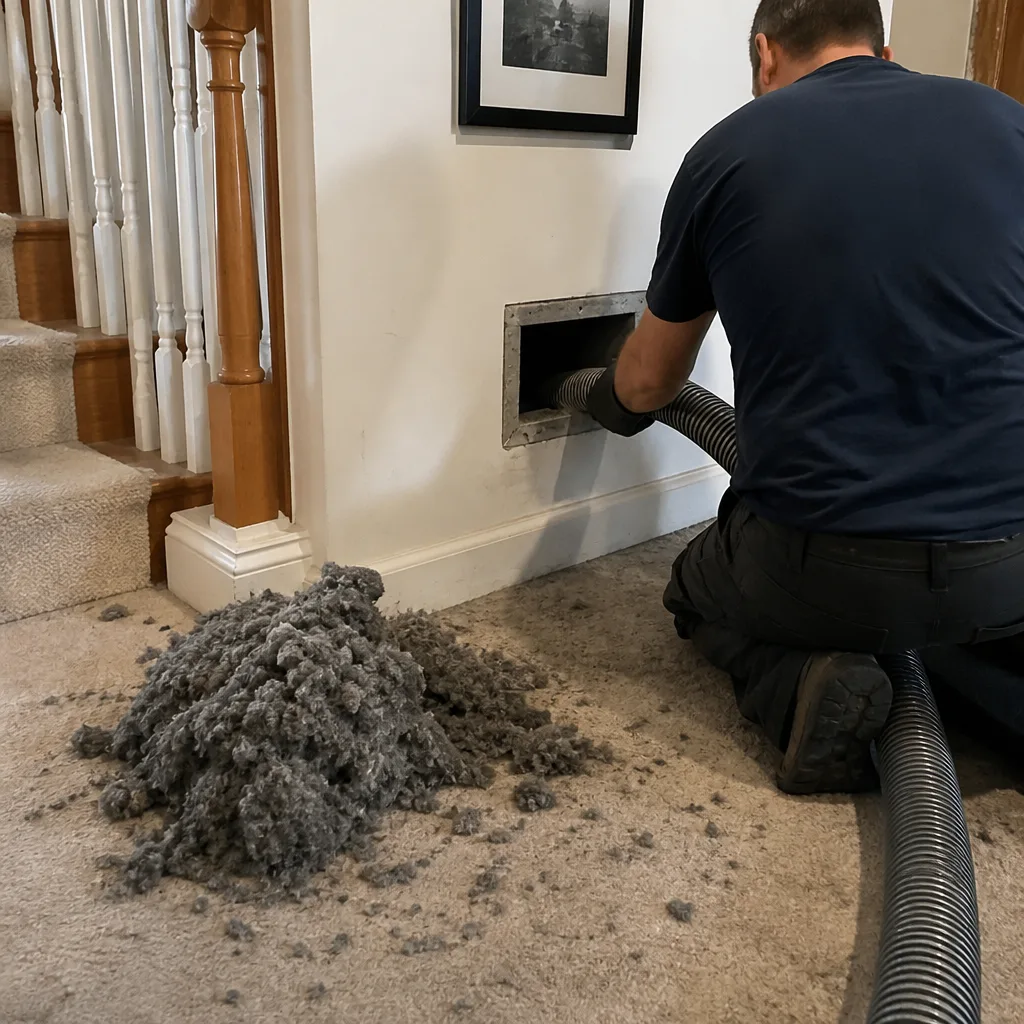 Before
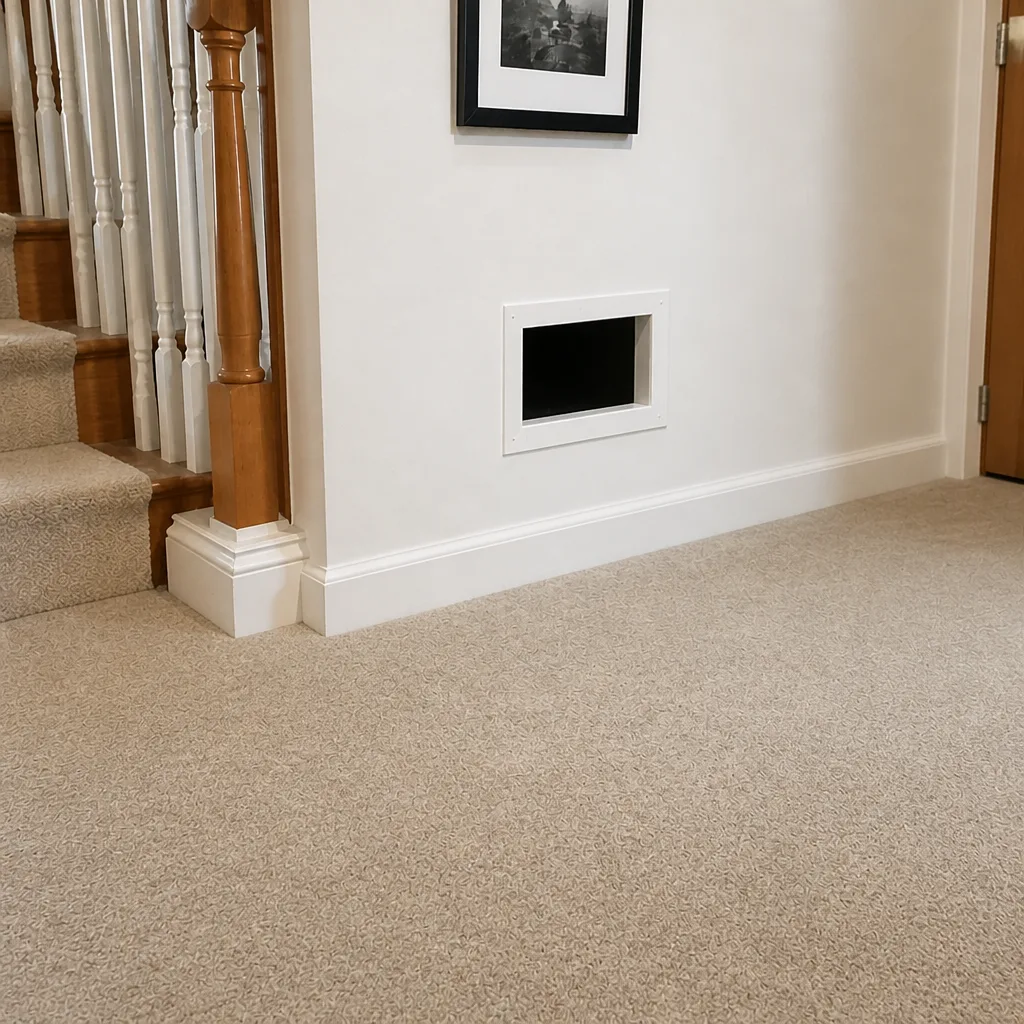 After
When to Call a Professional
Some signs point clearly to professional duct cleaning; others are maintenance cues. Call a professional when you notice visible dust blowing from supply registers a few minutes after the system starts, when the return grille face is matted with debris, when family members with allergies are reacting more indoors than out, when you’ve recently finished a renovation or moved into a home with unknown history, or when you see visible mold or hear a whistling that suggests a leaking duct. Also call if the dryer takes two cycles to dry a load – that’s a dryer vent prompt, and it belongs with the rest of the system. A cleaning visit is also the right moment to have duct integrity inspected, because leaks surfaced during cleaning can be repaired and sealed before they undo the work. Auburn Air Duct Cleaning Pros offers free estimates in Auburn – call (833) 513-8095. We answer 24/7. Fast dispatch from 7am to 7pm, Sunday through Friday.
Frequently Asked Questions
Air duct cleaning in Auburn is priced per system, not per vent, and the written estimate sets the final figure. Quotes vary with the number of branches, the duct material, whether the air handler is included, and whether repair and sealing are needed. The one thing to insist on is a flat price for the whole system agreed before work starts, so the invoice matches the quote. Call (833) 513-8095 for an exact quote – estimates are free.
Cheaper quotes usually cover less: just the main trunk lines, a smaller vacuum, and no air handler or negative-pressure containment. That’s how a low figure becomes a much larger invoice once the technician is on site and finds the rest of the system. A quote worth comparing covers the full air pathway at a flat price. Call (833) 513-8095 – we’ll walk through what’s included at no cost.
Ask for before-and-after photos of your own ducts, not stock images, plus a written scope of what was cleaned. A camera inspection of the duct interiors after cleaning confirms the debris is gone. If a contractor can’t show you the difference, you have no way to verify the job. Call (833) 513-8095 for a free estimate with the scope spelled out.
Most homes benefit from cleaning every few years, though Auburn’s cedar and fir pollen and the construction dust near SR-167 push some homes toward more frequent attention. Homes with pets, recent renovations, or allergy-sensitive residents tend to notice a difference sooner. The honest answer is to inspect first and clean on evidence, not a timetable. Call (833) 513-8095 for a free assessment.
Cleaning removes the pollen, dust, and smoke residue that get re-suspended into the air every time the blower runs, which makes a real difference for allergy-sensitive households. Pairing cleaning with filtration upgrades – Honeywell or Aprilaire components – improves the system’s ability to handle Auburn’s smoke season going forward. Call (833) 513-8095 to discuss what your system needs.
Yes. Duct repair and sealing are part of the same visit when leaks, tears, or disconnected runs turn up during cleaning. Sealing the system after cleaning is what keeps contamination from re-entering, and it’s what separates a full-service job from a cleaning that has to be redone. Call (833) 513-8095 for a free estimate that includes inspection.
The Bottom Line
Your duct system is one connected loop, and cleaning only part of it wastes the money you spend. The branch runs, boots, plenums, and air handler carry the load most partial cleanings miss, and leaks left unsealed undo the work within months. In Auburn, cedar and fir pollen, construction dust near SR-167, and summer wildfire smoke all add to what settles inside. A complete job – contact-vacuum cleaning under negative pressure, an inspected and cleaned air handler, repair and sealing where needed, and before-and-after photos – is what indoor air you can verify actually looks like. The local pro we connect you with is licensed and insured as their state requires, and the price is one flat figure per system agreed before work starts.
If it’s been a while since your ductwork was addressed, start with an inspection rather than another guess. The team at Auburn Air Duct Cleaning Pros handles the full air pathway: air duct cleaning, dryer vent cleaning, HVAC cleaning, duct repair and sealing, and air quality work with recognized brands. If you want the complete picture of what’s inside your system, read more about how we approach every job. Call (833) 513-8095 for a free estimate. We answer 24/7. Fast dispatch from 7am to 7pm, Sunday through Friday.
Written by the team at Auburn Air Duct Cleaning Pros.