
Last updated November 25, 2026
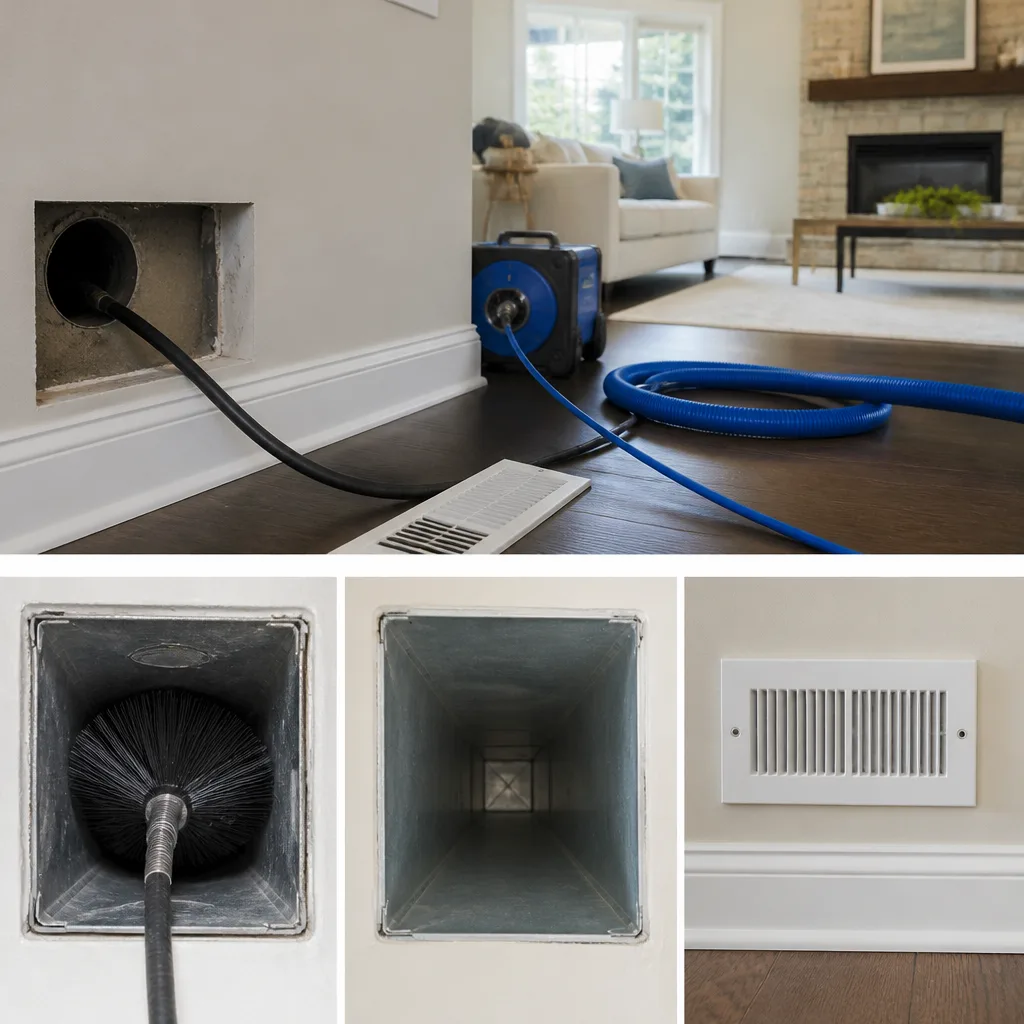 Whole-home duct cleaning
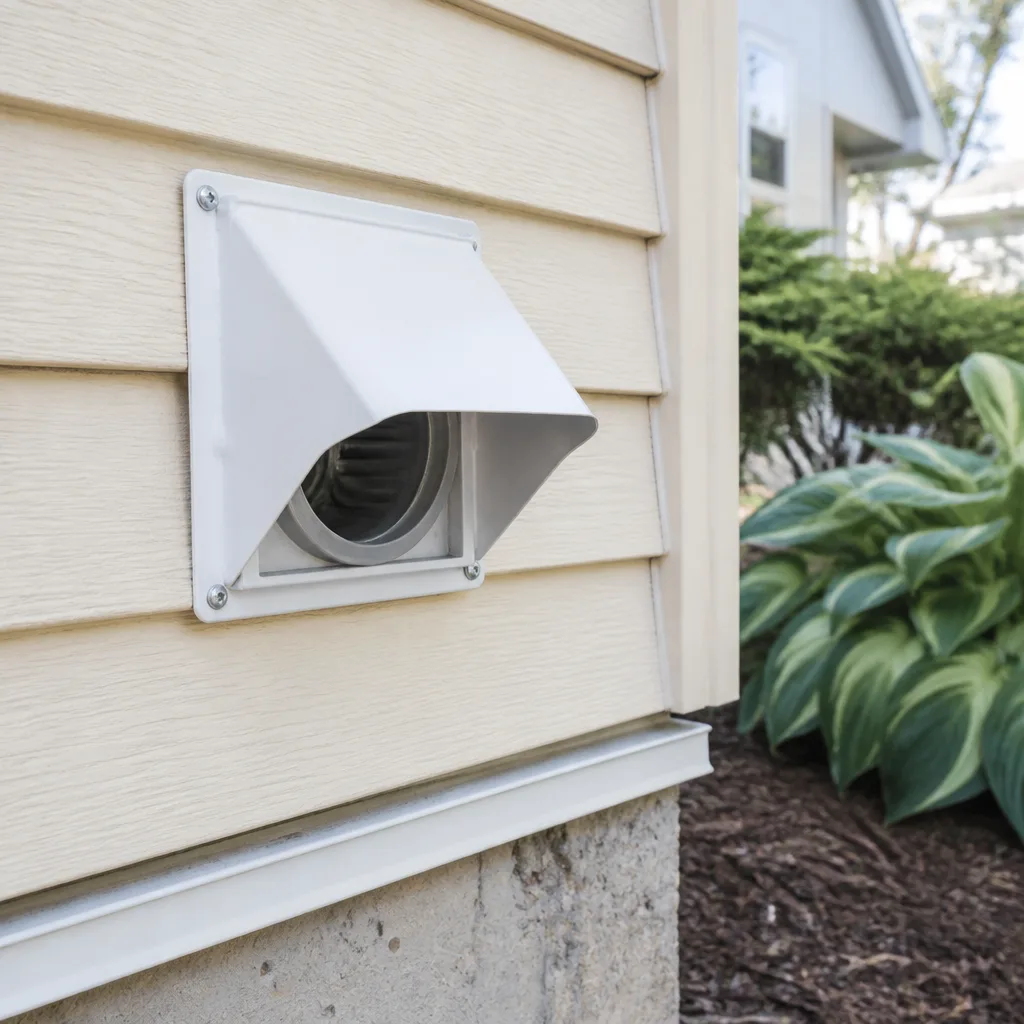 Dryer vent cleaning
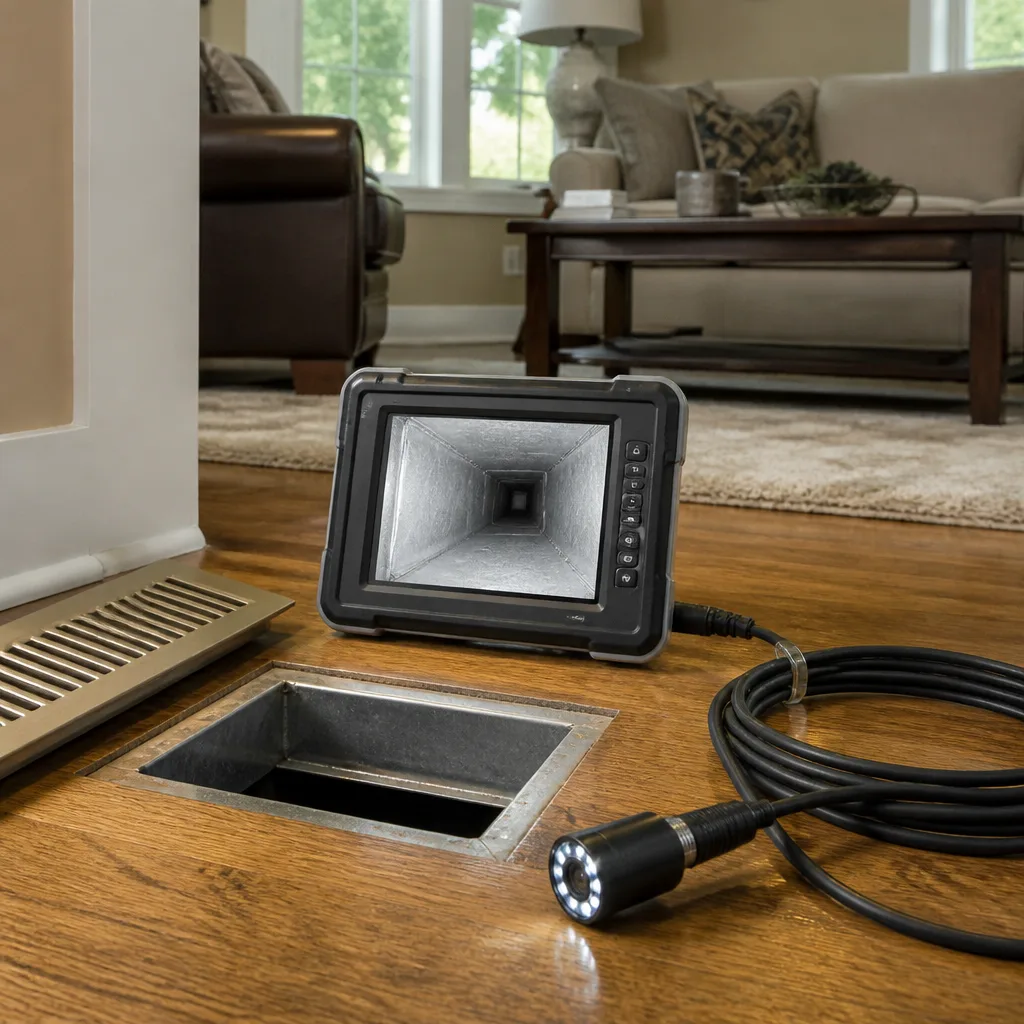 Camera inspection
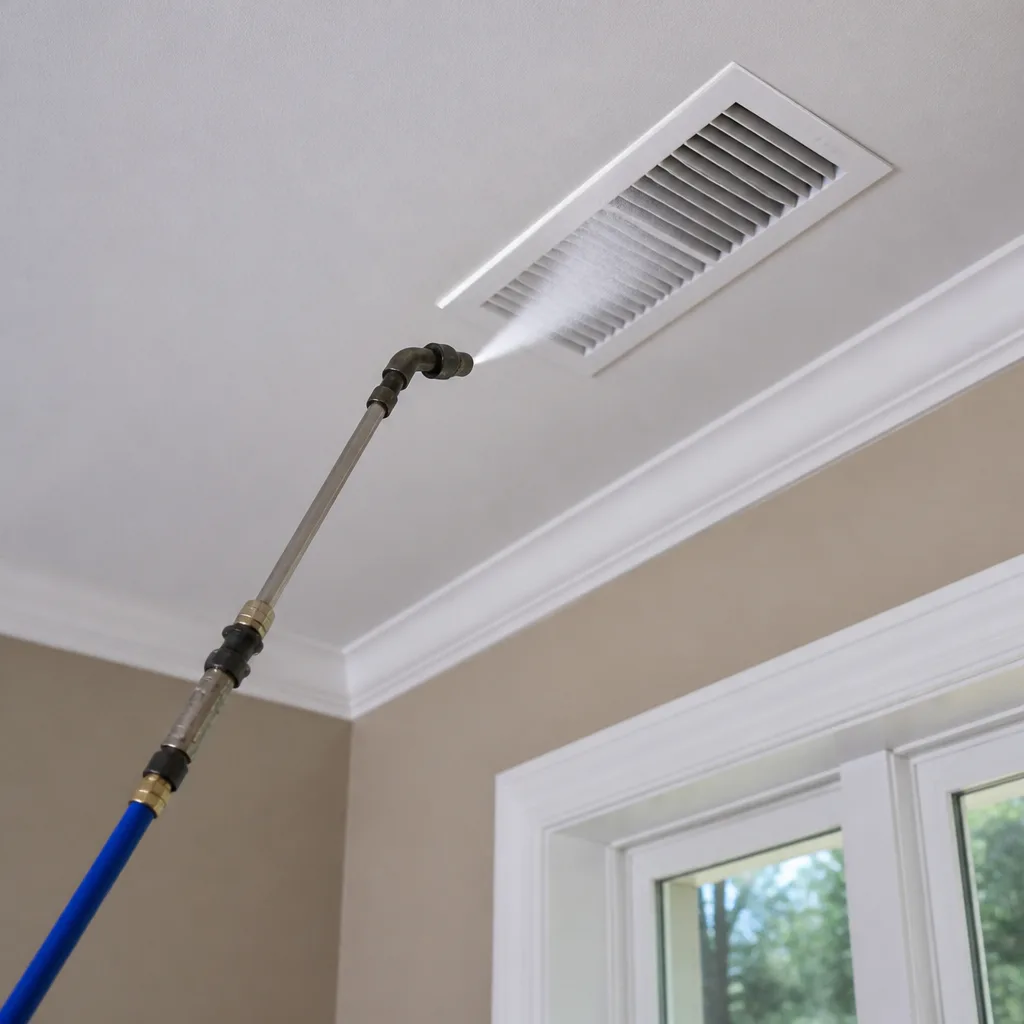 Sanitizing & deodorizing
Whole-system duct and dryer vent check with before-and-after photos - you see exactly what came out of your vents
That "$99 whole-house special" is a bait ad - the real number appears once they are in your hallway, or the "clean" is a shop-vac at the register. We photograph the inside of your ducts before and after instead.
DIY vs Professional Air Duct Cleaning: The Auburn Homeowner’s Decision Guide
Most of what you’ve read about DIY air duct cleaning focuses on the wrong variable. It’s not about effort, technique, or whether you watched enough videos. It’s about air pressure. A consumer-grade duct cleaning kit pulls roughly 50 to 100 CFM of suction. A professional contact-vacuum system built around a Rotobrush or Nikro platform generates orders of magnitude more capture capacity, and that gap decides whether loosened debris leaves your system or simply settles somewhere else inside it.
In this guide we’ll walk through what DIY cleaning genuinely handles well in Auburn homes, where it quietly makes things worse, and how to know which situation you’re in before you rent a machine. You’ll get a task-by-task comparison, a hybrid maintenance approach worth considering, and honest guidance on what professional work actually involves.
Quick Answer
DIY air duct cleaning works well for surface-level tasks: cleaning grilles and registers, clearing accessible dryer vent lint, and wiping down supply boots you can reach. It falls short for the interior of the duct system itself, because a consumer vacuum can’t maintain negative pressure across the length of the run. If debris is dislodged without enough suction to capture it, it can be pushed into the air handler and blower instead of removed. For anything beyond surface maintenance, professional equipment is the difference between cleaning and redistributing.
Styles & brands we work with
- Whole-home duct cleaning
- Dryer vent cleaning
- Camera inspection
- Sanitizing & deodorizing
Table of Contents
- The Physics Gap: Why Suction Defines the Job
- What DIY Cleaning Actually Does Well
- Negative Pressure and the Long Runs in Auburn Two-Story Homes
- The Hidden DIY Risk: Pushing Debris Into the Air Handler
- When DIY Is the Wrong Tool Entirely
- A Hybrid Approach That Works
- What to Ask Before You Hire Anyone
- Common Mistakes to Avoid
The Physics Gap: Why Suction Defines the Job
A consumer duct cleaning kit and a professional contact-vacuum system do not differ in degree. They differ in kind. The consumer version is, at its core, a shop vacuum with attachments. The professional version is a truck-mounted or high-capacity unit engineered to hold static pressure across a full duct run while an agitation tool loosens debris inside the duct walls. Both produce suction. Only one produces enough suction to keep airborne debris contained while it works.
Here’s why the number matters. Duct cleaning isn’t a sweeping task. It’s a capture task. Debris that has settled on the inside of a duct is either loose (already moving in the airstream) or adhered (bonded to the duct wall by dust, moisture, or lint). To remove adhered debris, you have to agitate it first. The instant you agitate it, it becomes airborne, and whatever captures it next determines whether the job succeeds.
That’s the gap. A shop vacuum at 50 to 100 CFM has enough pull to grab debris at the nozzle opening. It does not have enough pull to establish a pressure differential at the far end of a 40- or 60-foot duct run. So debris loosened near the register either falls back down, drifts sideways into a branch, or gets pushed by the forced-air system into the air handler on the next cycle.
Professional systems work differently in three ways:
- Pressure differential, not just suction. A high-capacity vacuum is sealed to the duct system at one end while agitation happens at the other, so the whole run is under negative pressure during the work. Debris has nowhere to go but out.
- Agitation designed for duct walls. Rotobrush tools are built to be run through duct interiors while the vacuum runs, so loosened material is captured in the same motion.
- Containment at the source. Negative-air containment (the kind of setup that Abatement Technologies equipment is built for) prevents debris loosened during the work from drifting into occupied rooms.
None of this is available in a rental unit. That’s not a knock against the rental unit. It’s a fact about what the job actually requires when the goal is removal rather than movement.
What DIY Cleaning Actually Does Well
There is real work a homeowner can do, and it’s worth naming clearly because it’s where most DIY effort should go. Surface-level components take on a large share of the visible debris load, and they’re all reachable without special equipment.
These tasks genuinely benefit from homeowner attention:
- Register and grille cleaning. The faceplate and louvers collect dust fast. Pop the grille, wash it in a utility sink or with a hose, let it dry fully, and reinstall. A soft brush or old toothbrush works on tight corners. This alone can visibly reduce dust streaking on walls and ceilings.
- Supply boot wiping. The boot is the short metal or flex section between the ductwork and the register. Reachable boots can be wiped down with a damp cloth and a mild degreaser. Do not push a cloth deep into the boot; wipe the visible interior surface only.
- Return grille filter swaps. Many Auburn homes use a return-mounted filter grille that takes a standard pleated filter. Changing that filter on the manufacturer’s recommended interval is one of the highest-return maintenance tasks you can do for air quality.
- Accessible dryer vent lint removal. Pulling the flexible connector behind the dryer and clearing the visible lint is a real task with real value. The full run needs more than that (covered below), but the short accessible section is fair game.
- Exterior vent cap inspection. Bending down and checking that the outdoor dryer vent flapper opens freely and isn’t clogged with lint is quick, useful, and DIY-friendly.
That’s a meaningful list. It covers the parts of the air pathway you can see and reach. What it doesn’t cover is the interior of the ducts, which is where the debris that actually affects air quality lives.
Negative Pressure and the Long Runs in Auburn Two-Story Homes
Auburn has a lot of two-story homes built across the last several decades, and those homes typically have long trunk runs. The mechanical room or air handler sits low, often in a garage or utility closet, and the trunk line has to travel up to serve the second floor. Forty to sixty feet of trunk run is normal in this housing pattern, and that length is exactly where consumer equipment loses the fight.
Here’s the mechanics. Suction drops with distance and with any branch or turn in the run. A shop vacuum connected at a supply register on the far end of a 60-foot trunk has to overcome that distance before it produces any meaningful pull at the duct interior. By the time the airflow reaches the air handler end, the pull is close to zero. So you’re not cleaning a duct. You’re cleaning a foot or two of the duct directly behind the register.
Professional systems resolve this by using the duct system itself as the containment envelope rather than the nozzle. The high-capacity vacuum is connected at a dedicated access point (usually cut and sealed near the air handler or at a main trunk), and the entire run is pulled under negative pressure simultaneously. That’s what makes a 60-foot run cleanable in the first place.
Auburn-specific note: our wet winters mean the outdoor air the system draws in is often humid, and humid air carries dust differently than dry air. In two-story Auburn homes with long runs, that combination is why debris accumulates inside the duct walls faster than you’d expect from a visual register inspection alone. If the visible grille looks clean but you still see dust streaks around supply registers, the settled material is likely deeper in the run, past what consumer suction can reach.
You can test the difference yourself. Turn the system off before you start any surface cleaning; a running system pulls debris into the air handler while you work. Once the system is off, run a hand along the inside of the visible boot. Surface dust you can wipe is fine. Material that has moved deeper is where the DIY advantage ends.
The Hidden DIY Risk: Pushing Debris Into the Air Handler
This is the part of the DIY conversation most guides skip, and it’s the one that costs Auburn homeowners the most. When you agitate debris inside a duct without enough capture suction, the debris doesn’t disappear. It moves. And the direction it moves, if the forced-air system is on or cycles on after you finish, is toward the air handler.
The air handler contains the blower wheel and, in many configurations, the evaporator coil. Both are precision-fit components that don’t tolerate accumulated debris. A blower wheel coated with dust loses balance and moves air less efficiently. A clogged evaporator coil ices over, runs harder, and can lead to compressor problems over time. Neither is a cheap repair, and both are avoidable.
What this looks like in practice:
- Debris is loosened from the duct wall by the agitation tool.
- Capture suction is insufficient to pull that debris to the vacuum, so it stays airborne inside the duct.
- The forced-air system (or the return pressure from the next cycle) pulls the airborne debris toward the air handler.
- Some of it lands on the blower wheel, the coil, or the return plenum surfaces.
- The homeowner sees no change or a slight worsening in air quality, then pays for an HVAC cleaning that would not have been needed if the ducts had been cleaned with proper equipment in the first place.
That last step is the real answer to “is DIY cheaper?” In a lightly soiled system where surface cleaning alone is appropriate, yes. In a system with substantial interior accumulation, DIY agitation plus a resulting HVAC cleaning can cost more than a single professional duct cleaning would have. We’ve seen this pattern in Auburn repeatedly.
If you’re going to work on your own system, the safe surface tasks are worth doing. Anything that requires opening a duct run or agitating interior duct walls is where you want professional equipment, and professional judgment about whether the system even needs that work yet.
When DIY Is the Wrong Tool Entirely
Certain situations carry risk beyond the “may not help” category. In these cases, DIY cleaning is not merely ineffective; it can spread contamination, damage components, or miss a problem that needs repair, not cleaning.
Do not attempt DIY duct cleaning if any of the following is true:
- Post-renovation debris. Drywall dust, sawdust, and construction grit settle in the ducts after a remodel and plug filters fast. Volume is high, and it’s fine material that becomes airborne easily. Professional contact-vacuum work with negative-pressure containment is the appropriate response.
- Rodent contamination. Droppings, nesting material, and urine residue require careful removal with containment, and the duct surfaces often need sanitizing afterward. Disturbing this material without containment can make the air quality worse in the short term.
- Flex duct with tears, kinks, or disconnections. Flex duct is easy to damage further. If a section is torn or disconnected, cleaning without inspecting for and repairing that damage just moves debris back into the living space. Duct repair and sealing has to come with or before the cleaning, not after.
- Visible mold growth inside the ductwork. If you see it with a flashlight at an accessible opening, it’s already a situation calling for professional evaluation. Mold inside ducts is a moisture and air-pathway problem; cleaning without addressing the moisture source won’t hold.
- Any system where you can’t see the duct interior. If the ducts are fully concealed in walls and ceilings, DIY access is limited to the registers, and the majority of the system is untouched regardless of how carefully you work those registers.
In all of these cases, what the job requires is not extra effort but additional equipment and a repair-first plan. If your ducts need repair alongside cleaning, that pair of services is worth scheduling together.
A Hybrid Approach That Works
The most useful approach for most Auburn homeowners is neither all-DIY nor all-professional. It’s a division of labor: homeowner handles the surface, professional handles the system, and both happen on a predictable schedule.
Homeowner tasks, done between professional visits:
- Wash register grilles and diffusers at least annually, and more often if you have pets or live near a busy road. Warm soapy water, dry fully, reinstall.
- Change the air filter on the manufacturer’s schedule, not on a “when it looks dirty” basis. A basic pleated filter changed on time protects the blower better than a high-MERV filter changed late.
- Check the outdoor dryer vent cap quarterly. Clear any lint at the flapper and confirm it opens freely.
- Wipe accessible supply boots a couple of times a year with a damp cloth.
- Note dust patterns. If a specific register is producing visible dust streaks, note it. That’s useful information for the next professional visit.
Professional full-system service, on a cycle. For most Auburn homes, a professional air duct cleaning on a three-to-five-year cycle is a reasonable baseline, adjusted upward if the home has pets, recent renovation, allergy concerns, or a smoker in the household. Between visits, the surface tasks above handle the visible load.
The value of the hybrid approach is that it removes the excuse to skip professional work (“I’ll just do it myself”) and it removes the excuse to over-schedule professional work (“I should have this done every year”). Neither extreme fits most homes.
What to Ask Before You Hire Anyone
The DIY-vs-professional question often becomes a professional-vs-professional question once you decide to hire. The category has a low-bidder problem, and asking the right questions eliminates most of the risk. Our own preference is to know exactly what equipment is going to be on the job, because the equipment is what determines whether the work actually happens.
Ask these questions specifically:
- What equipment is used for the cleaning? An answer should name actual systems. Rotobrush and Nikro are industry-standard contact-vacuum platforms; if the company can’t name the equipment, that’s worth noting.
- Is negative pressure maintained during the work? The right answer is a contained system with proper suction at a dedicated access point, not just a nozzle at the registers.
- Is the air handler inspected as part of the cleaning? Debris reaches the blower and coil. A cleaning that skips those components leaves the contamination load mostly in place.
- Are ducts inspected for leaks and damage during the cleaning? A company with duct repair and sealing capability can correct what it finds. A company that only cleans will hand you a report.
- Is sanitizing offered after mechanical cleaning? Sanitizing comes after cleaning, never instead of it. It’s not a substitute for removing the debris.
- Is the estimate written and set before work starts? A flat price per job, agreed in writing, is the way to avoid the coupon-to-invoice surprise.
We run Rotobrush and Nikro cleaning systems, use Abatement Technologies containment, and can integrate Honeywell and Aprilaire filtration upgrades at time of service. That equipment list matters because it’s what makes the answers to those questions concrete rather than aspirational. We’d rather you ask the questions of every company you consider, ours included.
Two more components belong in the same conversation. A professional full-system visit should include dryer vent cleaning (the vent run has its own fire-risk implications and lint accumulation profile, separate from the HVAC ducts) and HVAC cleaning for the air handler components that collect what the ducts carry.
Common Mistakes to Avoid
- Running the forced-air system while cleaning. Two sentences: The blower pulls loosened debris toward the air handler during your work. Turn the system off at the thermostat and at the breaker before touching anything.
- Using a shop vacuum without HEPA containment. Two sentences: A standard shop vacuum exhausts fine particles back into the room at high velocity. If you’re surface cleaning with a vacuum, use a HEPA-filtered unit or skip the vacuum entirely and wipe.
- Pushing a brush deep into a flex duct run. Two sentences: Flex duct tears easily and the inner liner does not tolerate aggressive scrubbing. Limit DIY work to the rigid portions and the boot; leave flex duct interiors to professional equipment.
- Assuming a clean-looking grille means clean ducts. Two sentences: The grille sits at the end of the run, and debris accumulates deeper in. If you see dust streaking around registers but the grilles look fine, the load is inside the duct, not on the grille.
- Choosing a quote based on a coupon headline. Two sentences: A teaser price that balloons once the technician is on site is the pattern this industry is known for. Ask for a written, per-job estimate before work starts, every time.
- Skipping the dryer vent because it’s “just lint.” Two sentences: Dryer vent lint is a documented residential fire-risk source, not a comfort issue. Clear the accessible portion yourself, and have the full run professionally serviced on a reasonable interval.
- Cleaning right after a renovation without mentioning it to the technician. Two sentences: Post-renovation debris is a different cleaning job with different containment needs. Say so on the call so the right equipment is planned for.
- Cleaning the ducts without addressing leaks you can see. Two sentences: Contamination re-enters a leaking duct system faster than a sealed one. Duct repair and sealing is worth doing in the same visit as the cleaning.
See the difference
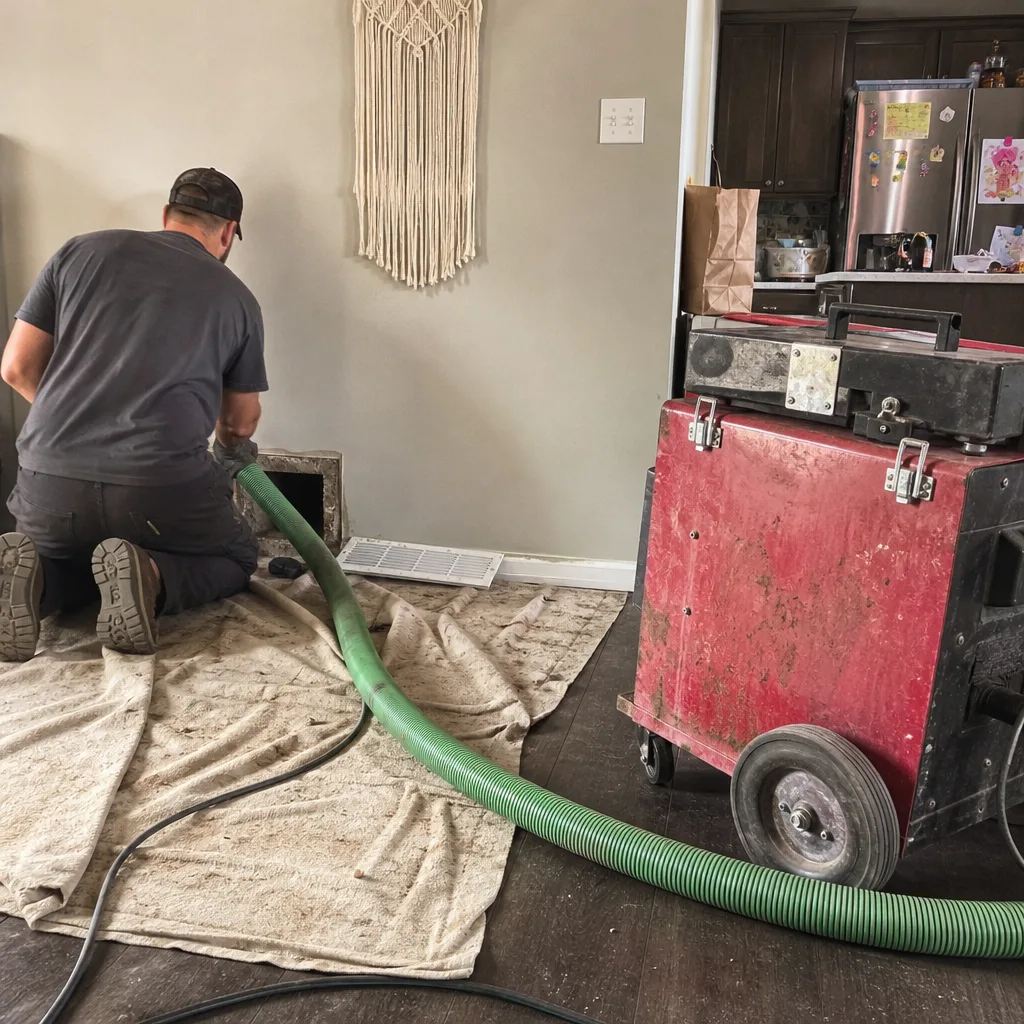 Before
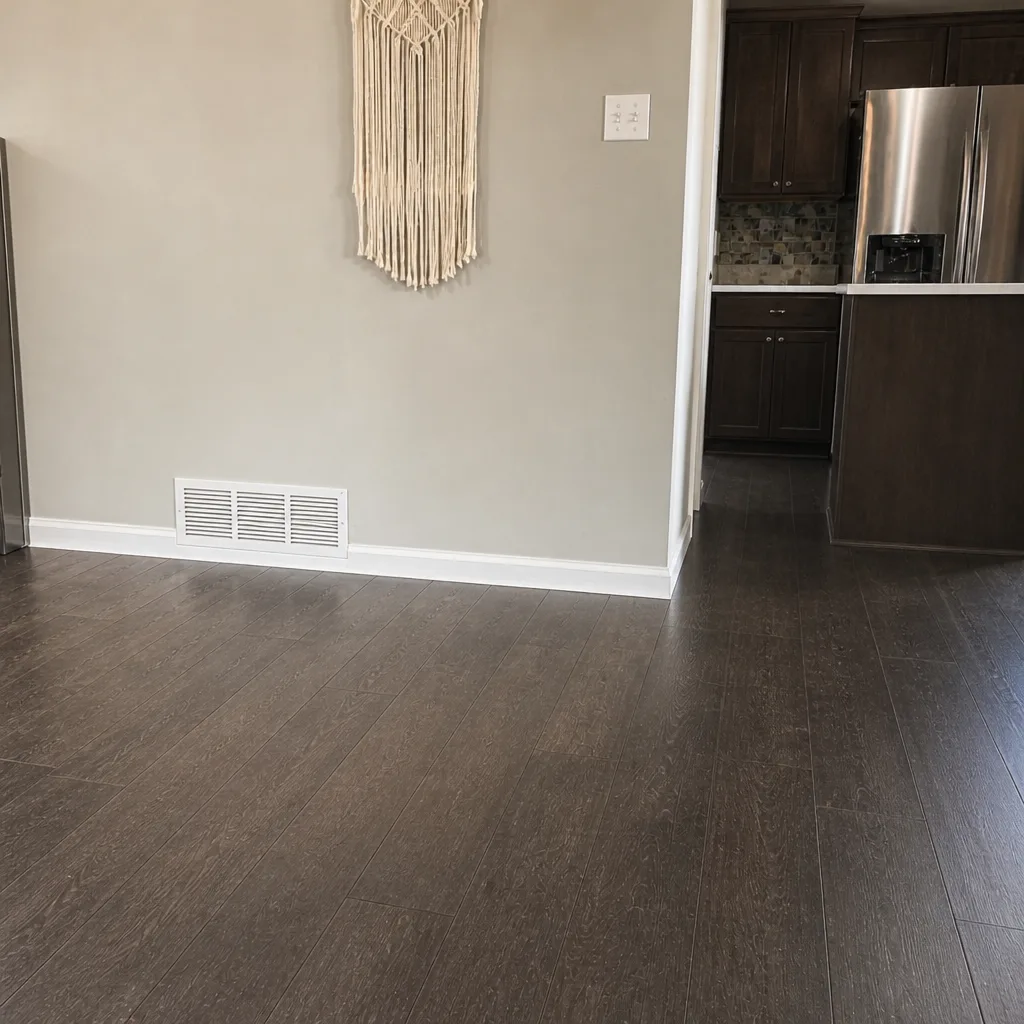 After
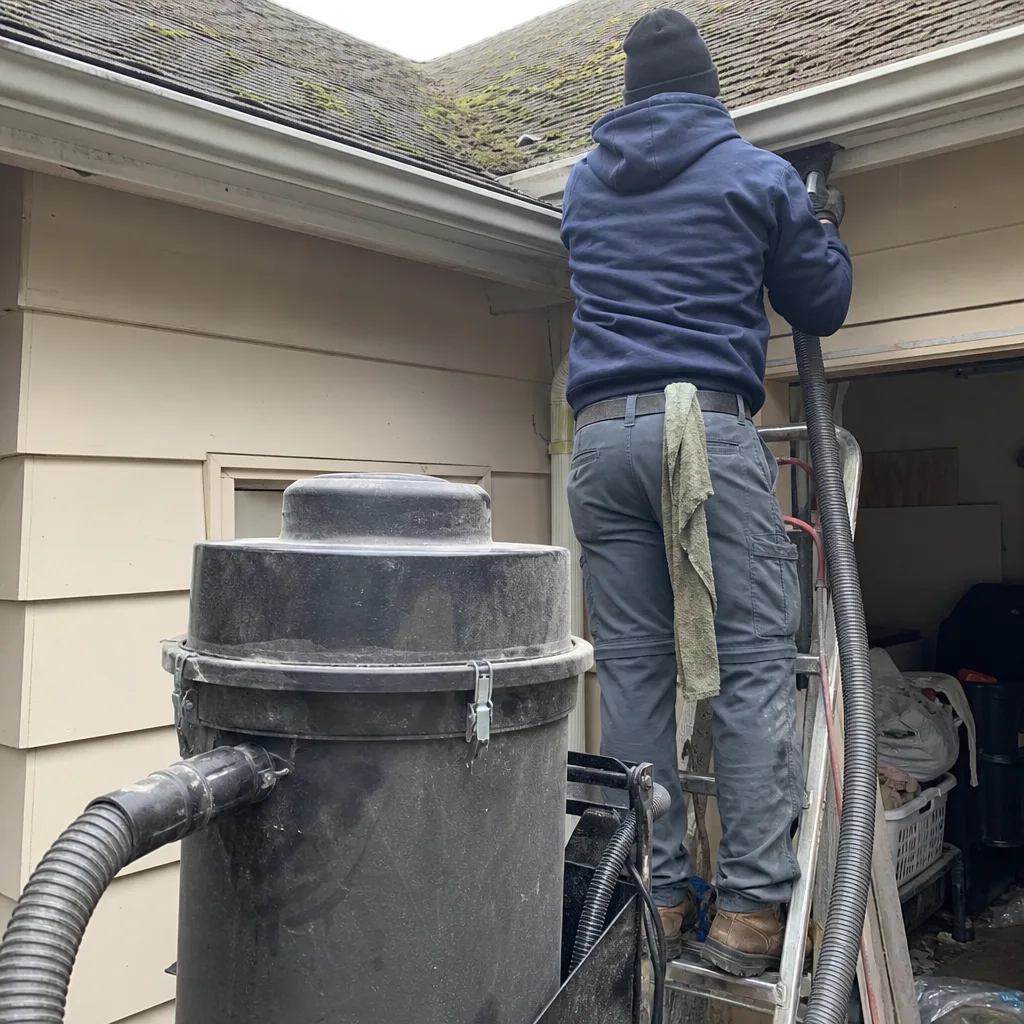 Before
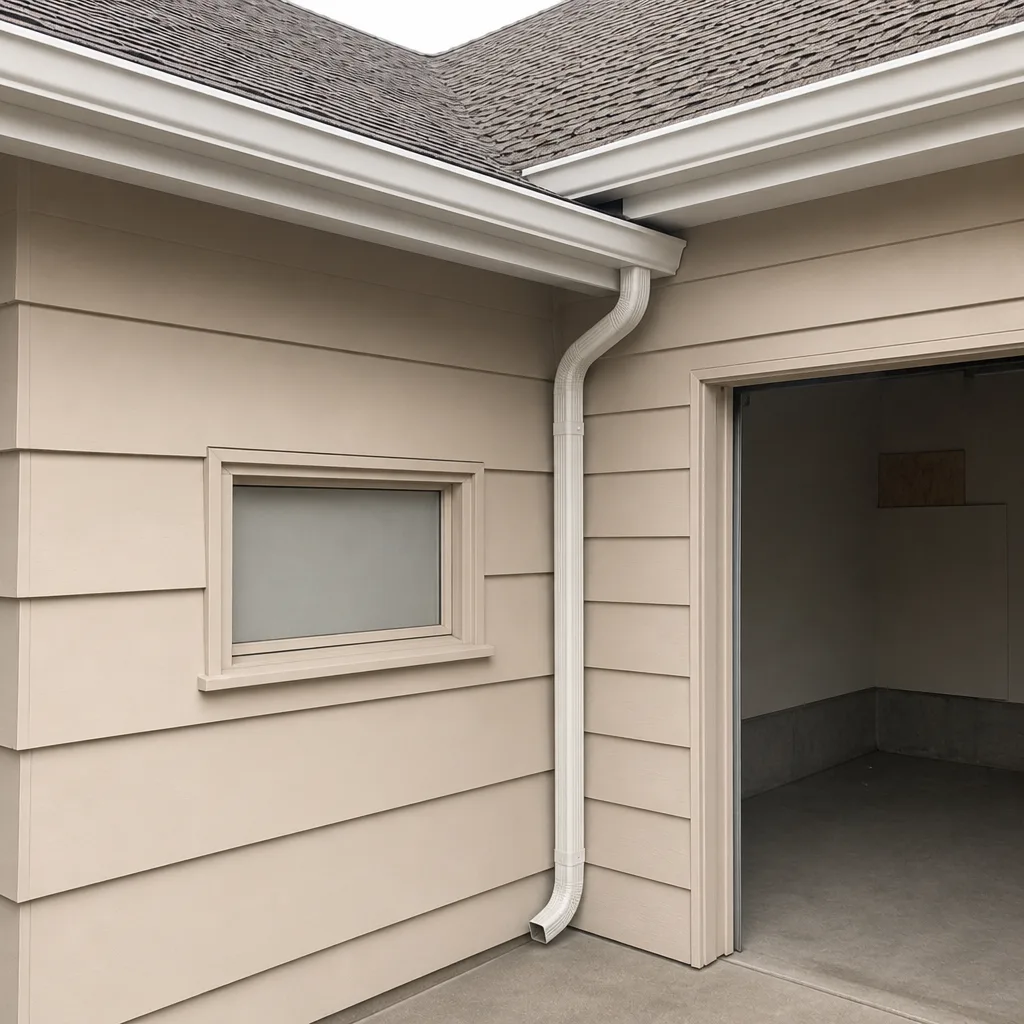 After
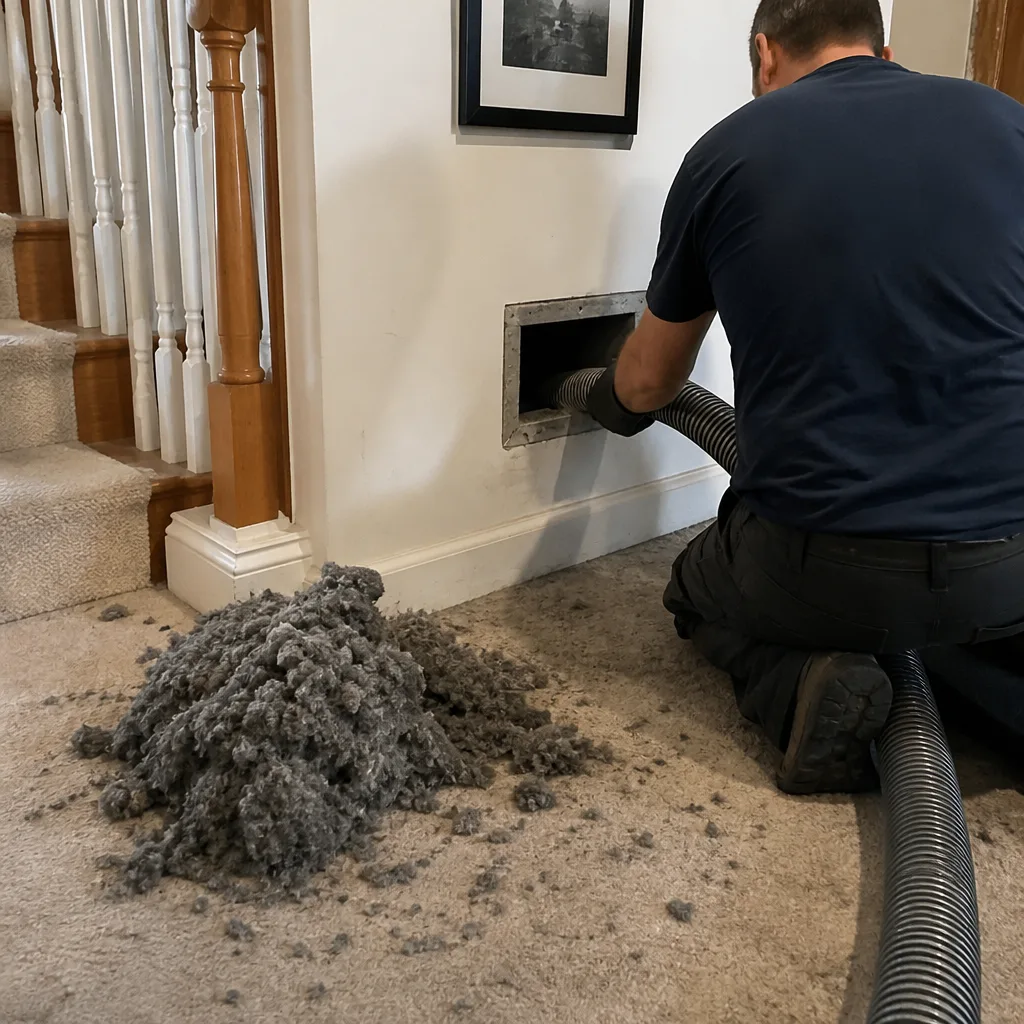 Before
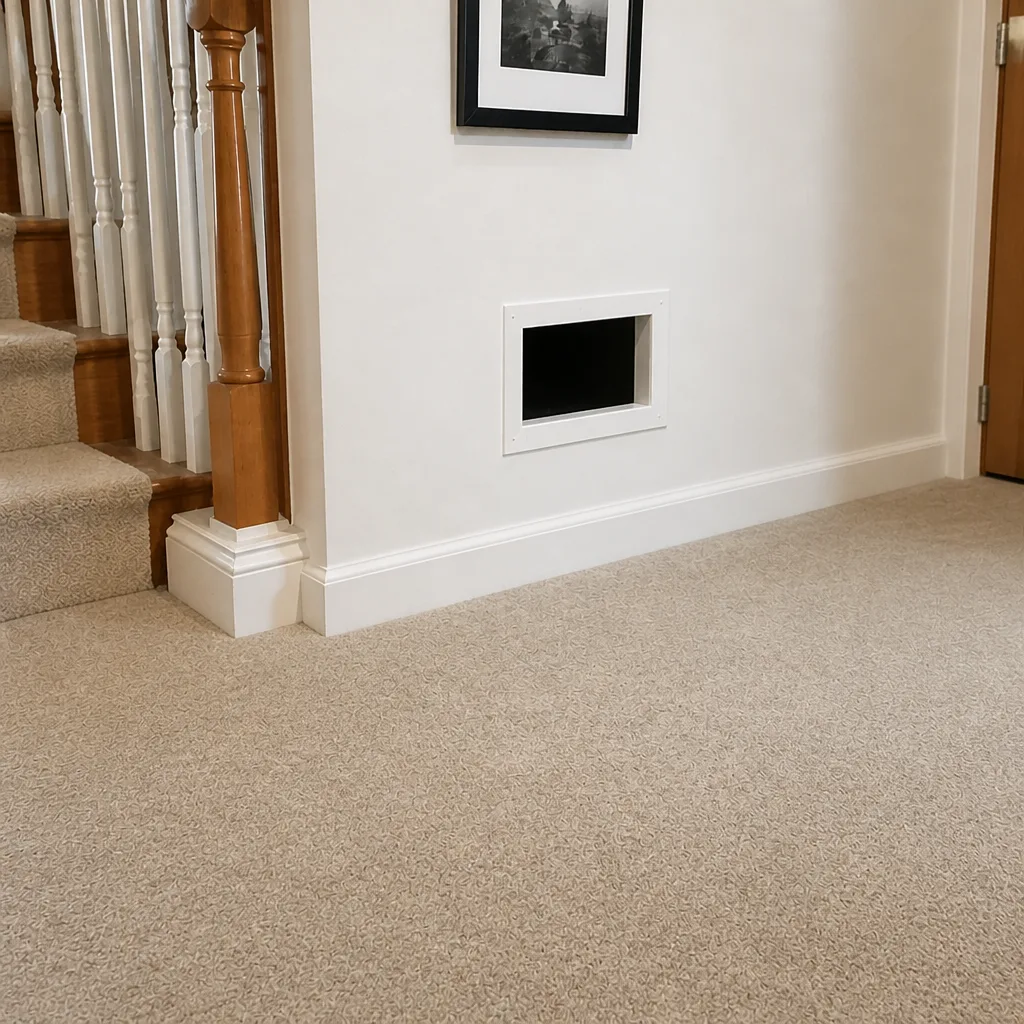 After
When to Call a Professional
Call a professional when the debris load is beyond surface reach, when a component in the system needs inspection (blower, coil, duct integrity), or when the situation involves post-renovation dust, rodent contamination, visible mold, or damaged flex duct. Those are not cases where extra effort closes the gap. They’re cases where the equipment and process make the difference between removal and redistribution.
If you’re simply not sure which camp you’re in, that’s a good reason to get an assessment before buying any equipment. Our technicians have up to 13 years of experience in exactly this judgment call, and we’re happy to tell you when DIY is the right answer and when it isn’t. Auburn Air Duct Cleaning Pros offers free estimates in Auburn. Call (833) 513-8095. We answer 24/7. Fast dispatch from 7am to 7pm, Sunday through Friday.
Frequently Asked Questions
Typical professional duct cleaning in the Auburn area falls in a per-job estimated range, not a per-vent price, because the total depends on system size, number of runs, condition, and whether repair or sanitizing is included. A written estimate sets the final price before any work begins, which is the number that matters. Call (833) 513-8095 for an exact quote. Estimates are free.
A low headline quote usually reflects a shorter process: fewer access points, no negative-pressure containment, brushes only at the registers, and no air handler work. In many cases the number grows once the technician is on site. Ask any company to quote per job in writing before the visit and to specify what equipment is used. Call (833) 513-8095 if you’d like to walk through what a typical Auburn job involves.
Ask for before-and-after photos taken of your own system, not stock images. You should also receive a description of what was found (debris volume, leaks, damage, blower condition) and what was done in each component. A company that documents the work with your system’s photos and a written summary has nothing to hide. Call (833) 513-8095 with any questions about documentation.
For most Auburn homes, a three-to-five-year cycle is a reasonable baseline. Shorter intervals make sense if you have pets, allergies, recent renovation dust, or a smoker in the household. Longer intervals can be fine in a lightly used home with well-maintained filtration. The honest answer depends on the specific system, which is why assessment matters before scheduling. Call (833) 513-8095 for guidance on your home.
Register cleaning is a legitimate DIY task and worth doing, but it doesn’t clean the duct interior. The debris that affects air quality and the air handler sits deeper in the run. A hybrid approach (register maintenance yourself, professional full-system cleaning on a three-to-five-year cycle) is what most homes actually need. Call (833) 513-8095 to schedule an assessment if you’re unsure where your system stands.
Yes, if the agitation outpaces the capture suction. Loosened debris that isn’t pulled out can be pushed toward the air handler, and some of it stays airborne inside the system. That’s the case for keeping DIY work to the registers, boots, and accessible dryer vent segment, and leaving duct interiors to equipment with real negative-pressure capability. Call (833) 513-8095 if you’re concerned your system may already have accumulated debris beyond the surface.
The Bottom Line
The DIY versus professional question is really a pressure question. Where the debris sits within reach of a hand or a cloth, DIY is fine and often genuinely useful. Where it sits deep in a duct run, behind flex, or inside the air handler’s reach, DIY equipment can’t establish the negative pressure that removal requires. That’s the line.
Auburn homes with long two-story trunk runs and wet winters are a good illustration of where the line falls. Keep your grilles, filters, and accessible boots clean. Have a professional full-system cleaning on a sensible cycle, ideally with duct integrity inspected and dryer vent serviced in the same visit. If it turns out you don’t need the professional work yet, an honest assessment will tell you that. That’s worth a phone call. Call (833) 513-8095. We answer 24/7. Fast dispatch from 7am to 7pm, Sunday through Friday.
Written by the team at Auburn Air Duct Cleaning Pros.