
Last updated November 25, 2026
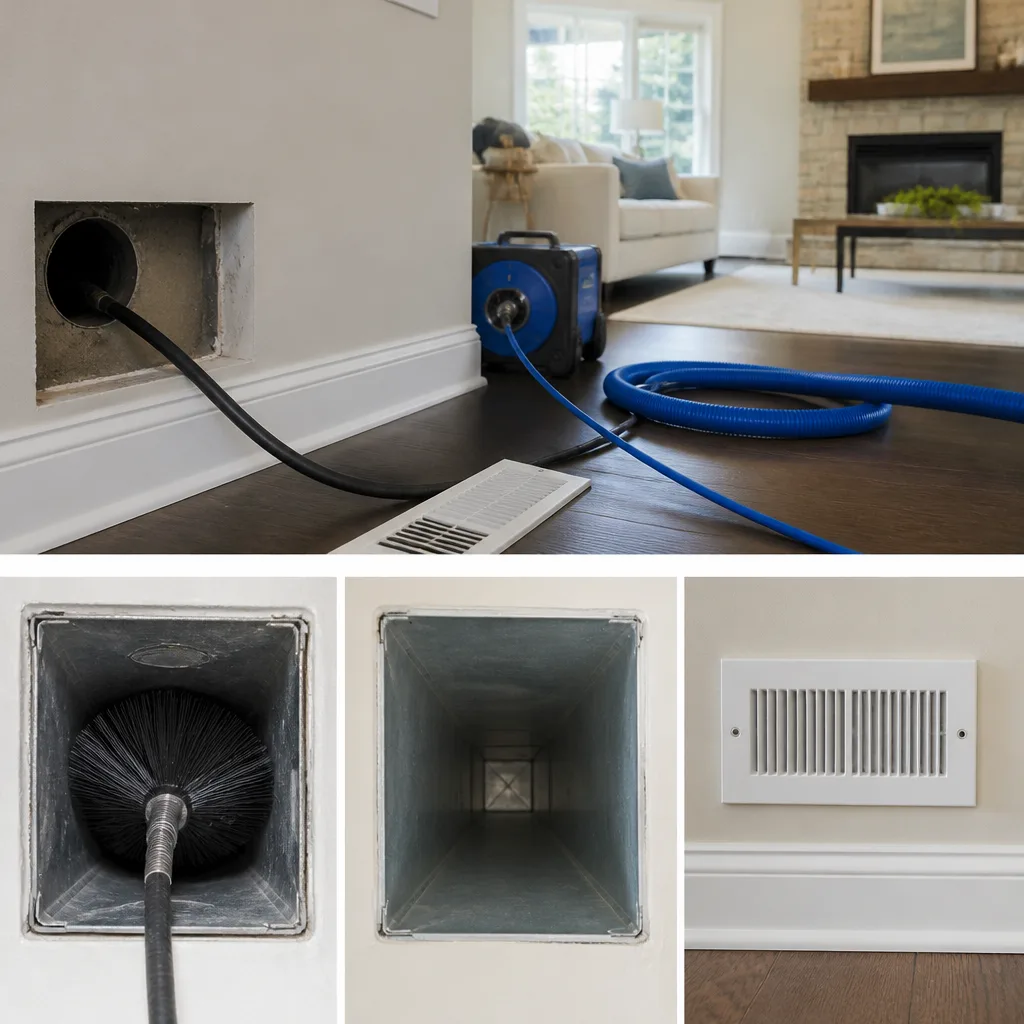 Whole-home duct cleaning
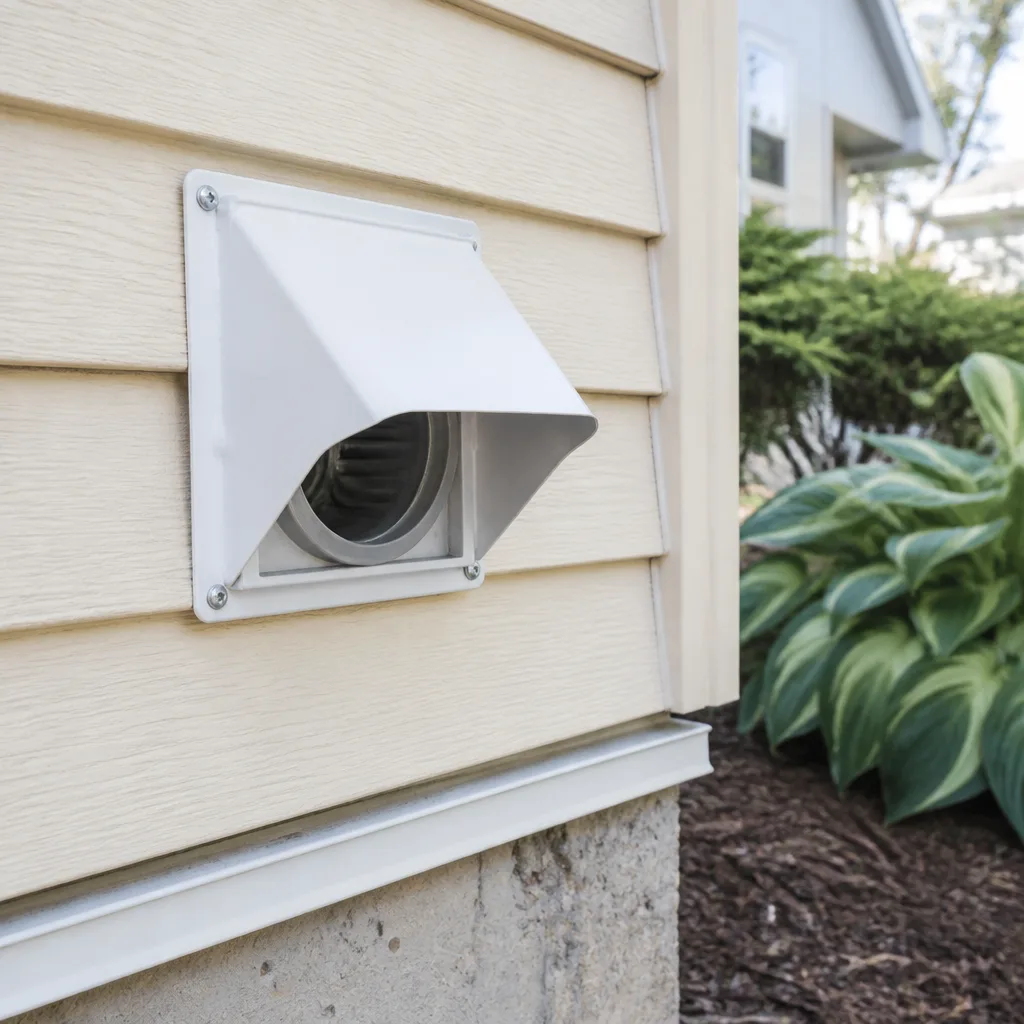 Dryer vent cleaning
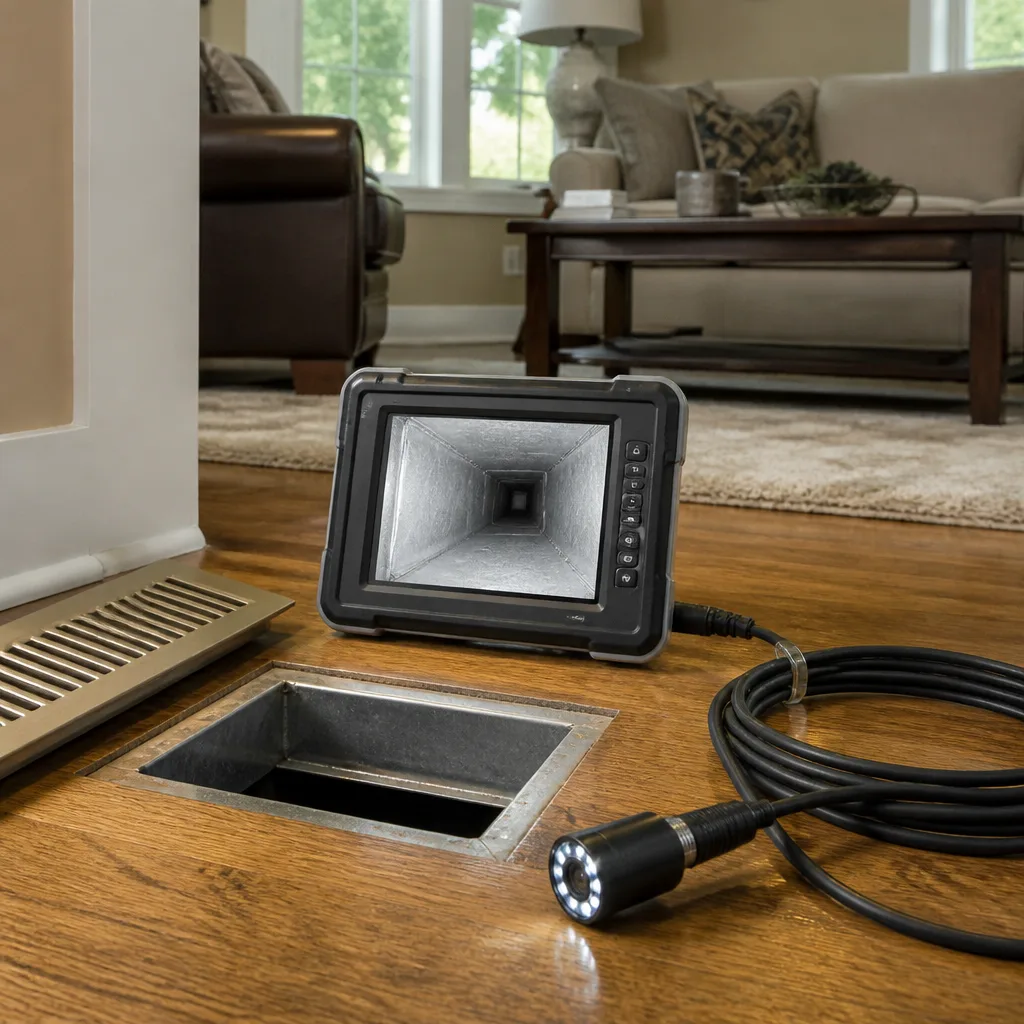 Camera inspection
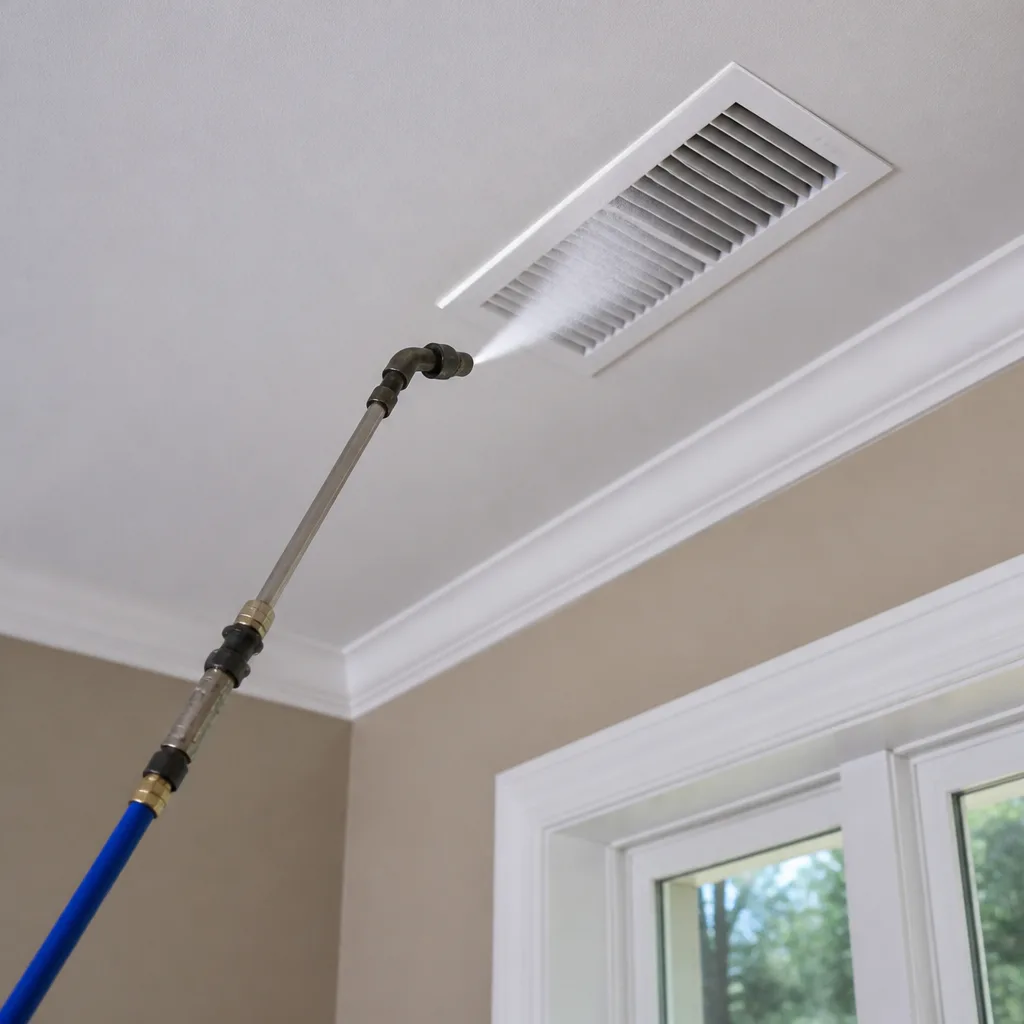 Sanitizing & deodorizing
Whole-system duct and dryer vent check with before-and-after photos - you see exactly what came out of your vents
That "$99 whole-house special" is a bait ad - the real number appears once they are in your hallway, or the "clean" is a shop-vac at the register. We photograph the inside of your ducts before and after instead.
Air Duct Cleaning Warning Signs: An Auburn Homeowner’s Reference Guide
If one room in your Auburn home runs 4 to 6 degrees cooler than the thermostat setting, most people blame the furnace. In our experience, the more common culprit is a disconnected or crushed flex duct branch tucked up in the crawlspace, quietly dumping conditioned air into the dirt instead of the bedroom. That single misread symptom stands in for a whole category of misdiagnosis. Dusty return grilles get treated as an allergy problem, musty smells get treated as a furnace problem, and pressure imbalances get treated as a house-problem. This reference guide maps the specific things you’re seeing back to their duct-system causes, so you can describe the problem accurately enough to get the right fix the first time. Our technicians have up to 13 years of experience reading these signals in Auburn homes.
Quick Answer
The main warning signs of a duct system needing professional attention are visible dust halos or black streaking around supply and return grilles, musty or dusty odors that return quickly after filter changes, uneven airflow between rooms, and dust that reappears on surfaces within days of cleaning. In Auburn, the signs that most often point to a duct problem rather than a furnace or filter problem are temperature differences of 4 to 6 degrees between rooms and odors that persist regardless of how often you change the filter. When several signs overlap, get the system inspected before spending money on a bigger furnace or another air purifier.
Styles & brands we work with
- Whole-home duct cleaning
- Dryer vent cleaning
- Camera inspection
- Sanitizing & deodorizing
Table of Contents
- What the Odor Is Telling You: Dust, Mold, and Refrigerant Mapped Apart
- Reading Your Grilles: What Gray Halos, Black Streaks, and Rust Stains Mean
- Airflow Asymmetry: The Tissue Test and What Low-Flow Rooms Reveal
- Warning Signs That Show Up After an Event: Renovation, Flood, Wildfire Smoke
- When Cleaning Isn’t Enough: Signs That Point to Repair, Resealing, or Liner Work
- Telling an HVAC Problem Apart From a Duct Problem
- Why Auburn Crawlspaces and Attics Multiply Duct Problems
- Common Mistakes to Avoid
- When to Call a Professional
What the Odor Is Telling You: Dust, Mold, and Refrigerant Mapped Apart
Odors are the most useful warning sign a duct system gives you, and the most frequently misread. The tricky part is that a homeowner’s nose blends them together, while the source of each is completely different and only one of them waits for an appointment.
Dust and musty odor
A dusty or slightly musty smell that appears when the system first kicks on and fades afterward is the classic signature of accumulated dust, debris, and light microbial growth on duct surfaces. It’s the smell of a system that’s overdue for cleaning. This is the most common odor we hear described in Auburn calls. It’s not urgent in a safety sense, but it doesn’t fix itself, and it tends to grow worse each season as more material settles.
Mold odor
An earthy, damp, persistent smell that stays in the house even when the system is off and even after you replace filters is different. That pattern usually points to moisture inside the ductwork or in the surrounding crawlspace, or to microbial growth on duct lining. A filter change won’t touch it because the filter isn’t the source. This one needs professional inspection of the duct interior and the surrounding structure, not another box of filters.
Refrigerant or electrical odor
This is the one you don’t wait on. A sweet, chemical smell, or the sharp acrid smell of hot insulation or burning plastic, means the system is telling you to shut it off. Refrigerant odor can indicate a leak, and an electrical odor can indicate an overheating component. Turn the system off at the thermostat and call a technician right away. Do not run the fan to clear the smell.
How to tell them apart in practice
- Note when the smell appears: only when the system kicks on, or all the time.
- Note whether it fades within a few minutes or persists.
- Change the filter, then observe for several days: if the smell returns unchanged, the filter is not the source.
- Describe the smell in words (dusty, earthy, sweet, acrid), not just as “bad,” when you call.
Reading Your Grilles: What Gray Halos, Black Streaks, and Rust Stains Mean
Walk around your Auburn home with a flashlight and look at every supply and return grille. The pattern of staining around each one tells you what’s happening behind it. This takes five minutes and gives you better diagnostic information than any digital gauge at the thermostat.
Gray dust halos
A fuzzy gray shadow on the wall or ceiling in a ring around the grille is normal at low levels. It’s the dust in the airstream settling at the grille perimeter where airflow changes direction. Heavy, dark, or rapidly returning halos are another matter. Those say the system is moving a lot of material past the grille, which most often traces back to a saturated filter, an under-sized return, or a duct interior that’s given up and needs cleaning.
Black streaking
Black streaking extending outward from the grille edges usually points to one of two things: a poorly sealed grille-to-ceiling gap pulling attic or wall-cavity air into the airstream, or a leak elsewhere in the duct run creating a localized negative-pressure pull. Either way, the fix is sealing, not just wiping. Streaking typically returns within a season on a duct system that isn’t sealed.
Rust stains and water marks
Rust on metal grilles, or water marks around the ceiling or wall edge of a grille, is a sign of condensation forming in or around the ductwork. This is common where duct runs pass through unconditioned space. Left alone, that moisture becomes a microbial-growth site. If you see this, the ductwork needs inspection before any cleaning is scheduled, because cleaning a wet system without addressing the moisture source wastes the cleaning.
What to check and in what order
- Every return grille: dust pattern, filter condition, and any streaking.
- Every supply grille: halo darkening and rust.
- Any grille near an exterior wall: condensation and water staining.
- Any grille in a low room or a room above a crawlspace: look for gaps at the ceiling line.
Airflow Asymmetry: The Tissue Test and What Low-Flow Rooms Reveal
Not all warning signs are smells or stains. Sometimes the loudest sign is silence, in the form of a room that barely registers airflow while the rest of the house moves air fine. A tissue test finds those rooms in a few minutes.
The tissue test
- Cut a strip of tissue roughly the length of your palm.
- Hold one end lightly between two fingers and place it near the center of each supply register with the system running in fan-only mode.
- Note how much the tissue deflects at each register and in which direction.
- Write down the room names side by side, so you have a picture of your whole airflow map.
The tissue should deflect noticeably and consistently at every register. A register where the tissue barely moves, or moves in a weak, fluttering way, is a low-flow register, and the cause is almost always upstream.
What low-flow rooms usually mean in Auburn homes
- Disconnected or crushed flex duct branch. Common in crawlspace runs under floors, where the flex can shift, kink, or pull loose at a fitting.
- Leaky duct joints. A joint that has separated or lost tape sends air into the crawlspace instead of the room.
- Closed or damaged balancing damper. A damper adjusted years ago and never reset, or a damper blade that has broken loose and is blocking the run.
- Undersized flex or a long run. A branch that’s too small or too long for the room’s load will always underperform unless the run is corrected.
- Blocked register boot or a crushed boot at the floor line. Furniture, insulation, or a boot that’s been stepped on in the attic.
Airflow asymmetry also does double duty as an energy-waste sign. If the room you paid to heat or cool isn’t getting the air, the system is running longer to compensate, and the thermostat number starts to look meaningless. Air balancing at the register only helps if the ducts behind them are actually doing their job. Fixing that starts with our air duct cleaning and duct-integrity service, which finds the leak or crush before a single cleaning pass is made.
Warning Signs That Show Up After an Event: Renovation, Flood, Wildfire Smoke
Some duct problems announce themselves after a specific event rather than building up slowly. If any of the events below apply to your home, inspect the duct system deliberately instead of waiting for the smell or the dust to make the decision for you.
After a renovation
Drywall dust, sawdust, insulation fibers, and construction debris all migrate into the returns while the system runs during the project. Even if the system was turned off for part of the work, the returns pull from the room. A renovation that produces visible dust on the horizontal surfaces almost always produced debris inside the returns and the first section of trunk. Signs to watch: a gritty feel on the inside of the first return you can reach, dust collecting faster than usual after the renovation cleans itself up, and streaking at the nearest supply grilles.
After a crawlspace flood or moisture event
In Auburn, a crawlspace takes on water during our wet stretches more often than most homeowners realize. When a crawlspace stays damp, moisture migrates into duct runs that pass through it. That moisture climbs into flex, collects at low points, and settles on the duct lining. Signs to watch: a persistent earthy odor that only appears when the heat or AC kicks on, rust on metal duct components in the crawlspace, and condensation on the outside of duct runs. Cleaning is the right first step, but the moisture source must be corrected, or the problem returns within a season.
After a wildfire smoke season
Wildfire smoke carries fine particulate that lands on the inside of duct surfaces and slowly re-enters the living space each time the blower cycles. Smoke-saturated ducts leave a recognizable signature: fine gray particulate on surfaces that returns after cleaning even with the windows closed, an acrid or campfire smell on first call for heat, and a system that seems to run longer at the start of every heating season. Standard cleaning alone doesn’t resolve smoke saturation. Our air duct cleaning process uses Abatement Technologies equipment to contain the loosened material under negative pressure, plus sanitizing with Guardsman to address what settles into the lining.
When Cleaning Isn’t Enough: Signs That Point to Repair, Resealing, or Liner Work
The most expensive mistake in duct work is booking a cleaning when the real need is a repair. Cleaning a system with a crushed branch or an open joint doesn’t change anything you’ll notice. Resealing or repairing it does. These signs say the problem is structural, not dirt.
Cleaning is not the answer for these signs
- Recurring dust within one week of a cleaning. If dust returns to surfaces a few days after the cleaning, the ducts are leaking debris in from the unconditioned space.
- Visible separations at joints or fittings. Look for gaping seams, disconnected flex at the collar, or tape that has fallen away.
- Condensation on the duct run or a wet crawlspace under the duct. Moisture means the ducts cannot stay clean until the moisture source is corrected and the ducts are sealed.
- Crushed flex, especially in the crawlspace. Flex does not recover its shape. It has to be replaced or re-routed.
- Fine construction dust appearing after renovation. The debris has infiltrated the system, and resealing the returns and re-cleaning the first section is the correct fix.
- Liner tearing or surface damage inside a rigid duct. Cleaning a damaged liner makes it worse, so the liner needs to be replaced or resealed first.
How to tell the difference before you call
- Look for dust returning to surfaces within a week of cleaning. That points to leaks.
- Feel along duct seams in the crawlspace for escaping air with the system running.
- Look for condensation beads on the outside of duct runs or a wet crawlspace floor beneath them.
- Check that the low-flow room in your tissue test hasn’t moved after a filter change.
- Look inside the first return boot for liner separation, torn flex, or a crushed collar.
If any of those signs match, the fix is a duct repair and sealing visit, not another cleaning. Cleaning is only useful after the ducts are sealed, otherwise the new dust goes straight back in. The other half of the fix is filtration: upgraded filters from Honeywell and Aprilaire can bring the system’s air quality back to the spec it was designed for, once the ducts are sealed.
Telling an HVAC Problem Apart From a Duct Problem
Some symptoms belong to the furnace or air handler, and some belong to the ducts. The two look similar from the thermostat, which is why so many duct problems get billed as furnace problems. The split tends to follow a simple rule.
Signs that belong to the ducts
- One or two rooms off temperature while the rest of the house is fine.
- Dust that reappears on surfaces quickly after cleaning.
- Odor that only appears when the system kicks on.
- Streaking or heavy halos at specific grilles.
- Any smell, dust, or streaking that follows a renovation, flood, or wildfire smoke season.
Signs that belong to the HVAC unit
- The whole house is off temperature, not just one room.
- The unit runs constantly without reaching the thermostat setting.
- The blower runs but the air isn’t warm or cold enough.
- Electrical or refrigerant odor, which always points to the unit.
- Water pooling at the air handler, which points to condensate handling, not the ducts.
When the split is genuinely unclear, we recommend starting with HVAC cleaning and a duct inspection before you consider equipment replacement. Our HVAC cleaning service covers the air-side components, and the inspection tells you whether the ducts or the unit is the real problem. Replacing a furnace to fix a crushed duct is an avoidable expense, and it happens more often than it should.
Why Auburn Crawlspaces and Attics Multiply Duct Problems
Auburn’s typical home configurations create the conditions that accelerate duct problems. Many homes sit on crawlspaces, many attics see wide temperature swings, and the wet stretches between October and April put moisture into every space the ductwork runs through. Ductwork in Auburn lives in harsher conditions than ducts in a mild, dry climate.
The three local factors that matter most
- Crawlspace moisture. Water in the crawlspace migrates into duct runs and the duct lining, which feeds microbial growth and accelerates rust. Ducts that pass through a crawlspace should be sealed at the collar and at the register boot, so crawlspace air stays out of your living space.
- Seasonal attic temperature swings. Attic ductwork expands and contracts with temperature, which stresses taped and mastic joints. Small separations build up slowly, and it takes an inspection to find them.
- Spring pollen load. Auburn’s spring fills the returns with pollen that then sits in the duct system for the rest of the year unless the system is cleaned. Pollen is fine, sticky, and works its way into the duct lining.
If your home has ducts in both the crawlspace and the attic, the inspection should cover both. Ducts that run through unconditioned space are where the leaks and moisture show up first, and where the vented crawlspace air enters the living space if the system isn’t sealed. When we set up a cleaning, we use Rotobrush and Nikro equipment for contact-vacuum cleaning, and we work under negative pressure with Abatement Technologies containment so loosened debris is pulled into the machine rather than into the rooms. Our Auburn Air Duct Cleaning Pros team works the full air pathway in a single visit: supply and return ducts, dryer vents, HVAC units, duct repair and sealing, and sanitizing.
Dryer Vent Warning Signs That Get Missed
Dryer vents are part of the same air-movement system, and their warning signs look nothing like duct signs. They’re the ones that matter most for safety. If your dryer is taking longer than it used to, the lint trap is filling faster than it used to, or the exterior vent flap doesn’t move while the dryer runs, the vent is restricting airflow and that restriction is a fire hazard. Lint is combustible, and a restricted vent traps heat. This is one place where standard residential best practice and local safety guidance meet: dryer vents should be cleaned when the airflow warning signs appear, not only when it’s convenient. Our dryer vent cleaning service clears the full run from the back of the appliance to the exterior flap, and the technician will tell you if the vent run itself is the problem.
Common Mistakes to Avoid
- Blaming the furnace for a single cold room. One room off by 4 to 6 degrees is the classic signature of a duct problem. Have the duct run inspected before you put money toward a furnace replacement or a home-energy audit.
- Changing the filter more often to fix a smell. A persistent earthy odor won’t change with a new filter, because the filter was never the source. That points to moisture in the ductwork or an unsealed crawlspace connection.
- Booking a cleaning when the ducts are leaking. If dust returns within a week of cleaning, or the low-flow room hasn’t changed after a filter change, the ducts need repair and sealing, not another cleaning pass.
- Wiping the streaks off the grilles and calling it done. Black streaking around the supply or return grille is a symptom. It returns within a season on an unsealed system, so sealing is the fix, not cleaning the surface.
- Ignoring the crawlspace. Auburn ducts that pass through a damp crawlspace take on moisture every wet season. That moisture becomes odor, then microbial growth. Sealing the ducts and correcting the crawlspace source together is what keeps the problem from returning.
- Waiting until a wildfire smoke season to think about the duct interior. Smoke-saturated ducts need cleaning plus sanitizing. Cleaning alone leaves fine particulate in the lining, and it comes back each time the blower runs.
- Running the system during a renovation without protecting the returns. Drywall dust and sawdust that enter the returns do not leave on their own. Check the first return boot after any renovation.
When to Call a Professional
Call us when you see signs that point to the ducts rather than the furnace or the filter: a persistent odor that only appears when the system runs, streaks or dark halos at specific grilles, dust returning within a week of a cleaning, or a single cold room that stays cold after a filter change. Call right away if you smell a sweet or acrid odor, which points to refrigerant or an electrical problem and means the system should be shut off. Call before you book a cleaning if your home has had a renovation, a crawlspace flood, or a wildfire smoke season, because the fix may be repair and sealing rather than cleaning alone. Auburn Air Duct Cleaning Pros offers free estimates in Auburn. Call (833) 513-8095. We answer 24/7. Fast dispatch from 7am to 7pm, Sunday through Friday.
See the difference
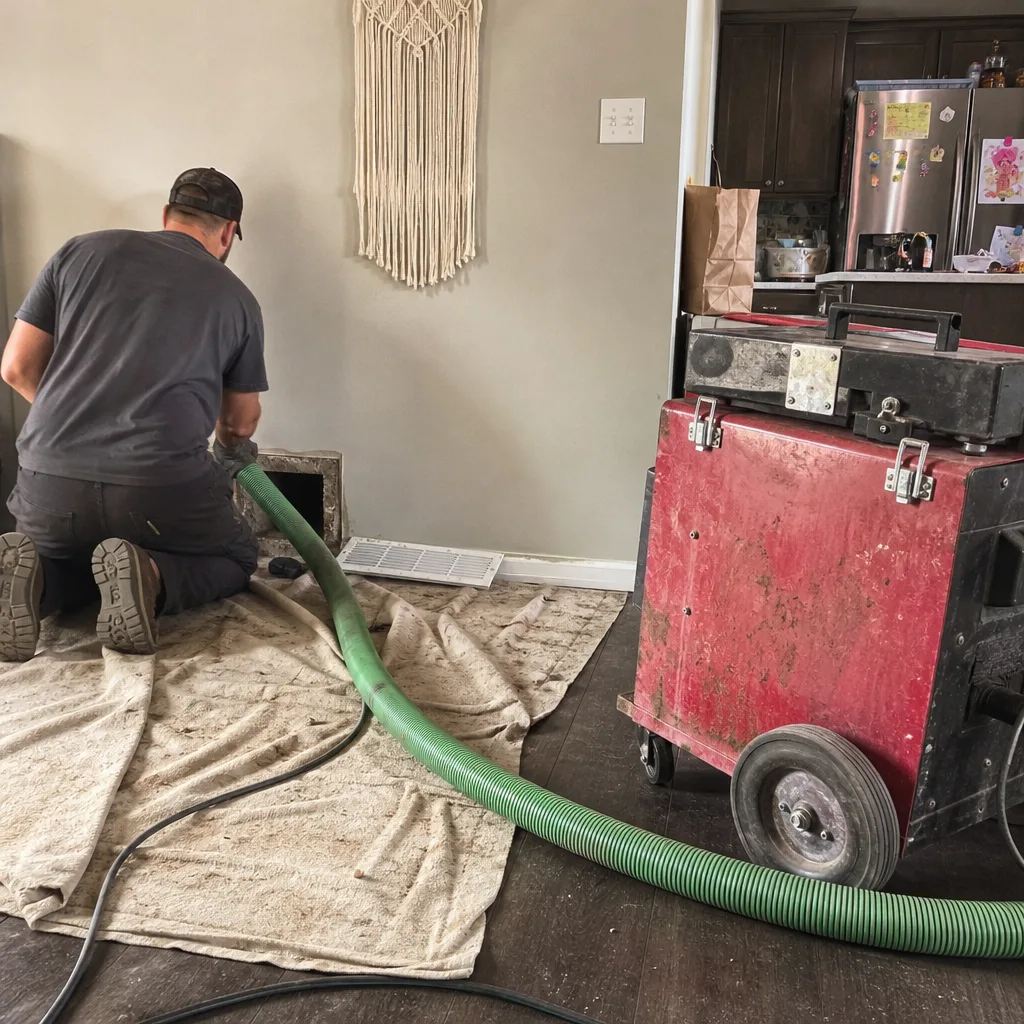 Before
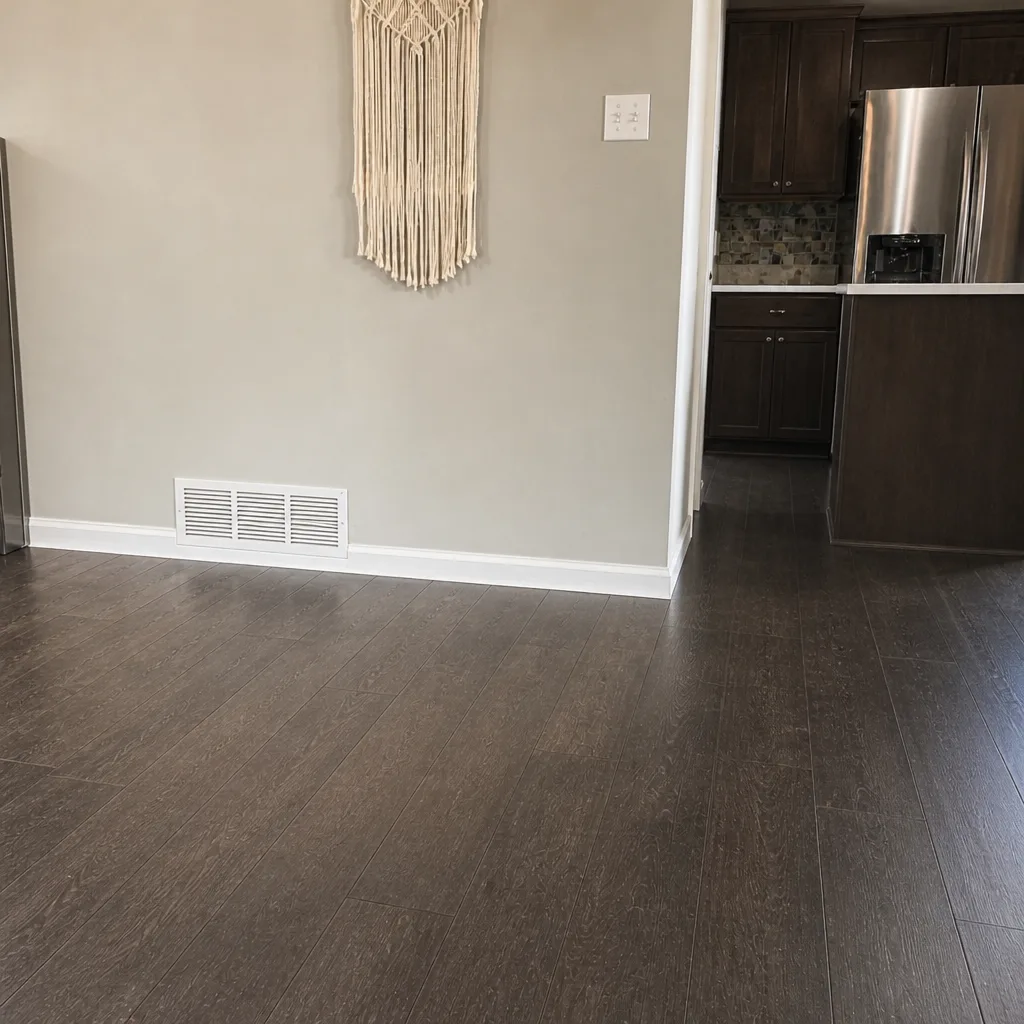 After
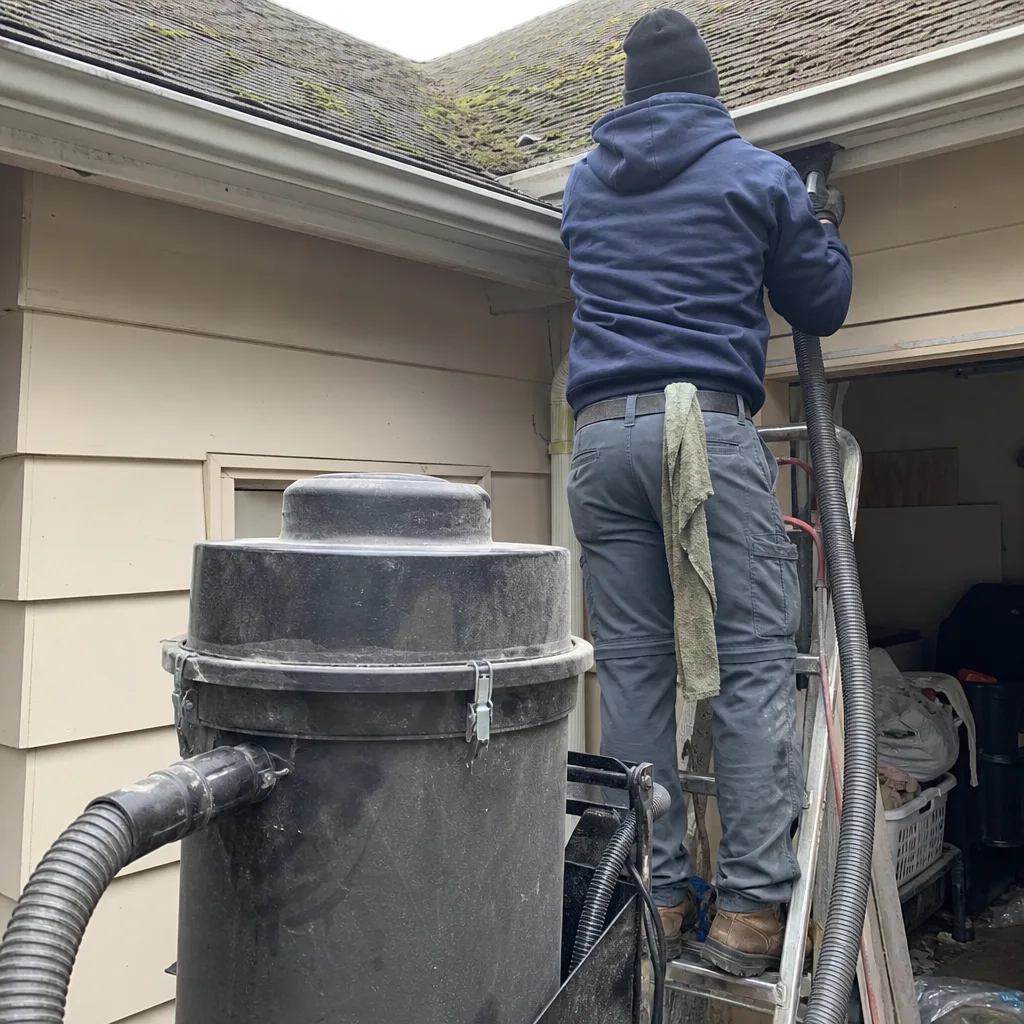 Before
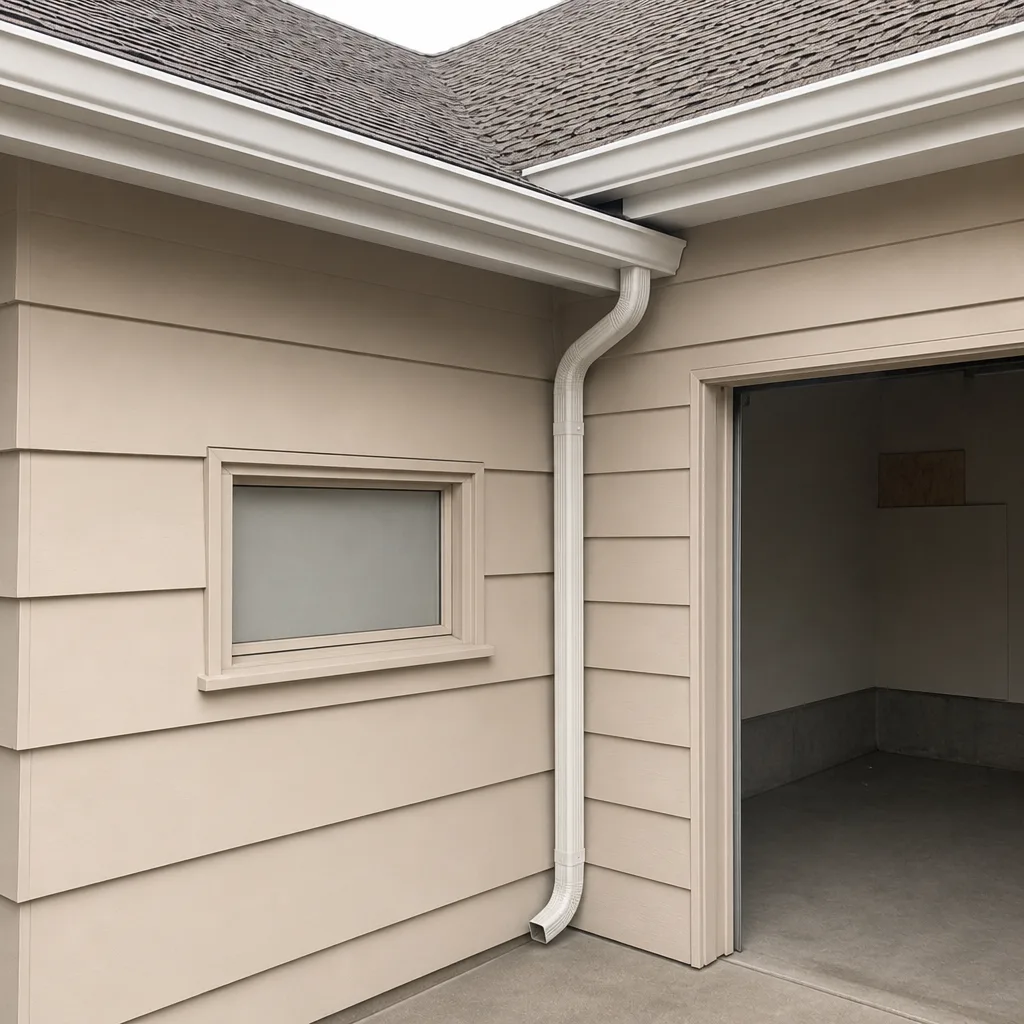 After
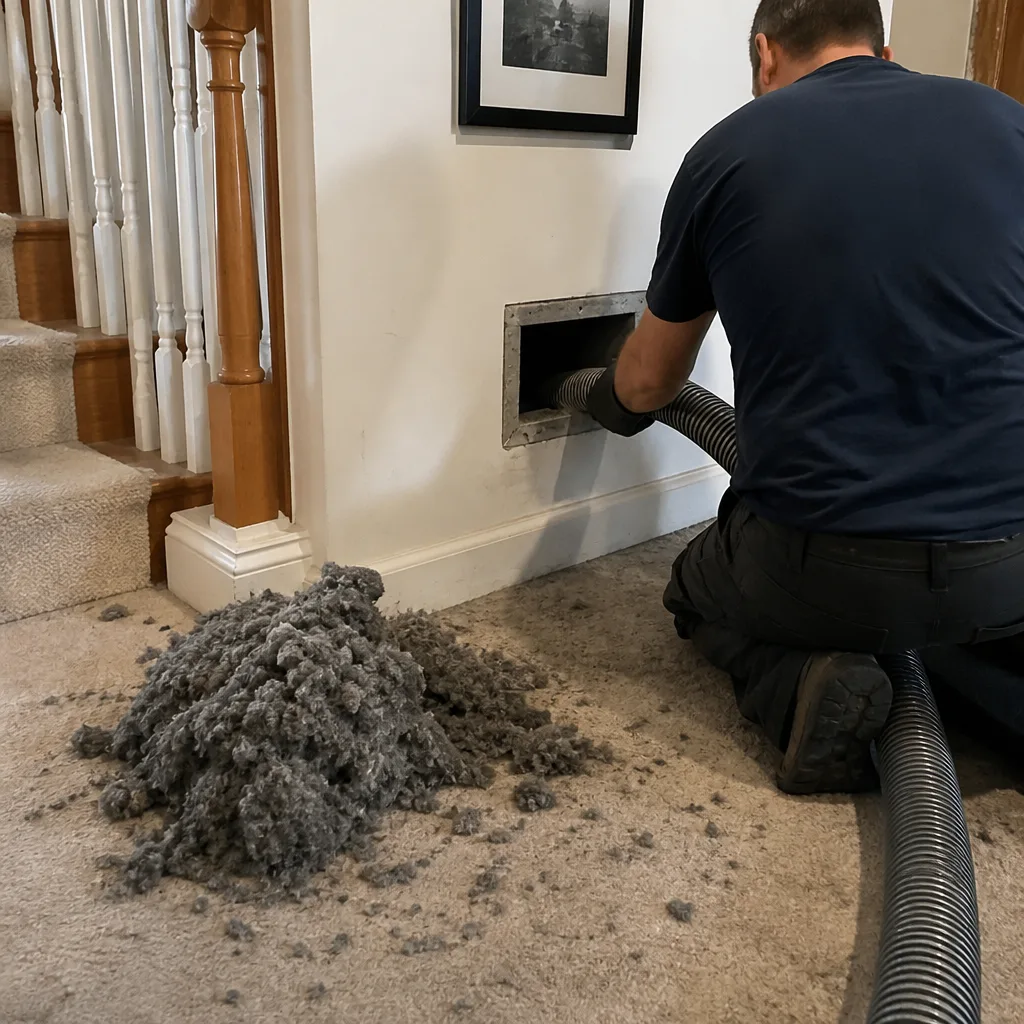 Before
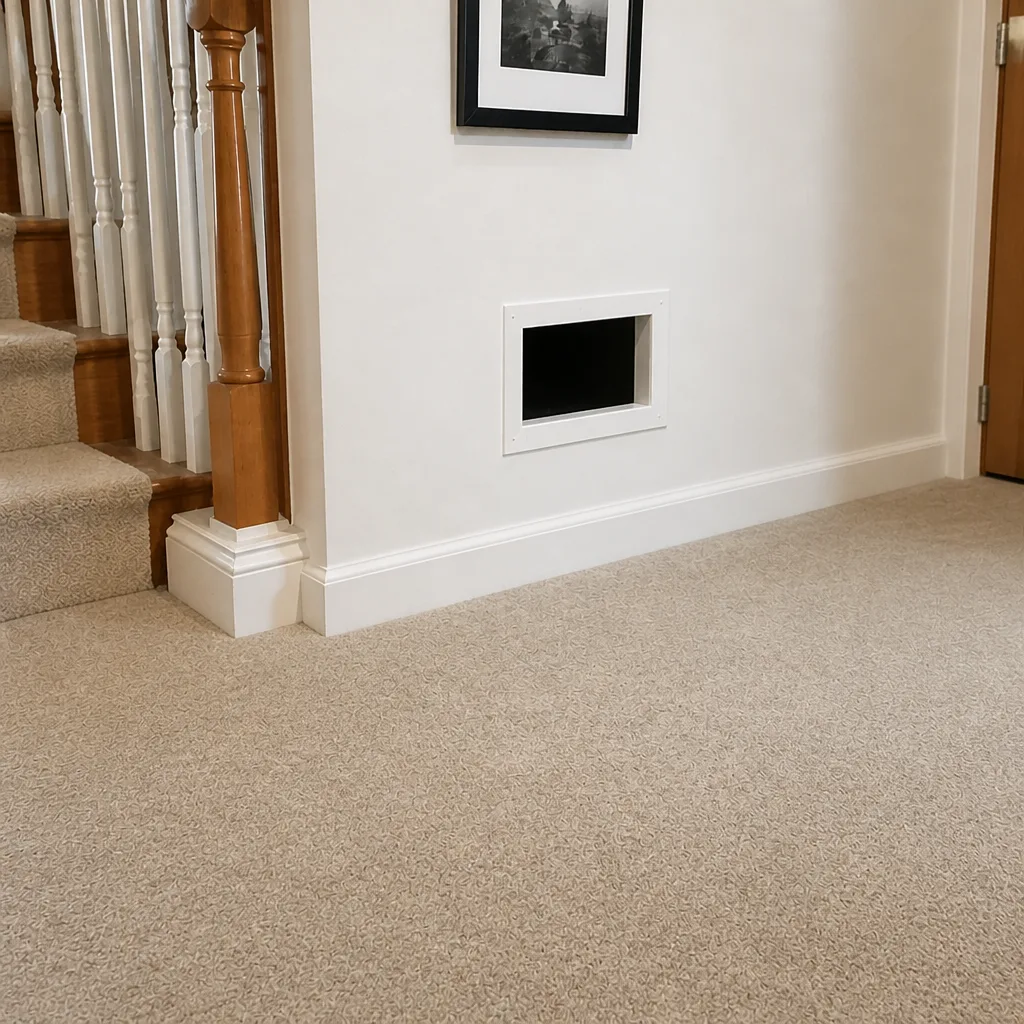 After
Frequently Asked Questions
Air duct cleaning in Auburn is priced per system, not per vent, and the written estimate you get before work starts sets the final price. We measure the whole system and quote one flat price for the full air pathway so you know the number before anything is loosened or cleaned. Call (833) 513-8095 for an exact quote. Estimates are free.
Cheap quotes usually come from a per-vent pricing model that shrinks the scope once the technician is on site, or a call that isn’t actually cleaning the whole system. We work from the full air pathway (supply, returns, HVAC unit, dryer vent) and quote one flat price per system. Before-and-after photos of your own ducts are part of the service, so you can verify the work happened. Call (833) 513-8095 for an exact quote. Estimates are free.
Ask for before-and-after photos of the duct interior, and ask which equipment was used. Standard contact-vacuum machines and negative-pressure containment are what make the difference between a real cleaning and a visible-surface wipe-down, and any legitimate company can tell you which brands they use. We work with Rotobrush and Nikro platforms and Abatement Technologies containment, and we provide the photos as part of the visit. Call (833) 513-8095 for an exact quote. Estimates are free.
Most Auburn homes need it when the warning signs appear, not on a fixed calendar. If you’ve had a renovation, a crawlspace moisture event, or a heavy wildfire smoke season, the sign-based trigger will come sooner. If the system runs clean and there’s no odor, no airflow asymmetry, and no dust returning, there’s no reason to schedule. Call (833) 513-8095 for an exact quote. Estimates are free.
Dirty ducts smell dusty or slightly musty and the smell fades when the blower settles. A mold odor is earthy and damp, and it stays in the air even when the system is off, which is the main signal that the ductwork and the surrounding crawlspace need inspection. If the smell returns immediately after a filter change, that’s the pattern to check. Call (833) 513-8095 for an exact quote. Estimates are free.
Usually not. One cold room, dust on surfaces, and odor that appears only when the system runs are duct symptoms, not furnace symptoms. A whole-house temperature problem, an electrical or refrigerant odor, or a unit that won’t reach the thermostat setting is the point where the HVAC unit should be evaluated. Call (833) 513-8095 for an exact quote. Estimates are free.
The Bottom Line
Warning signs from a duct system almost always point to the ducts, not the furnace, the filter, or the house. Single cold rooms, streaks and halos at grilles, recurring odor, dust that returns after cleaning, and warning signs that appear after a renovation or a wet crawlspace season all deserve a duct inspection before you spend money on equipment or filter changes. Cleaning, sealing, and repair address different problems, and getting the diagnosis right the first time is what saves money. If you can describe what you’re seeing in these terms, you can get the right fix. Written by the team at Auburn Air Duct Cleaning Pros.
Call (833) 513-8095 for a free estimate. We answer 24/7. Fast dispatch from 7am to 7pm, Sunday through Friday. Our technicians have up to 13 years of experience, and we’re happy to look at what you’re seeing and tell you honestly whether the fix is cleaning, sealing, or repair.
Written by the team at Auburn Air Duct Cleaning Pros.